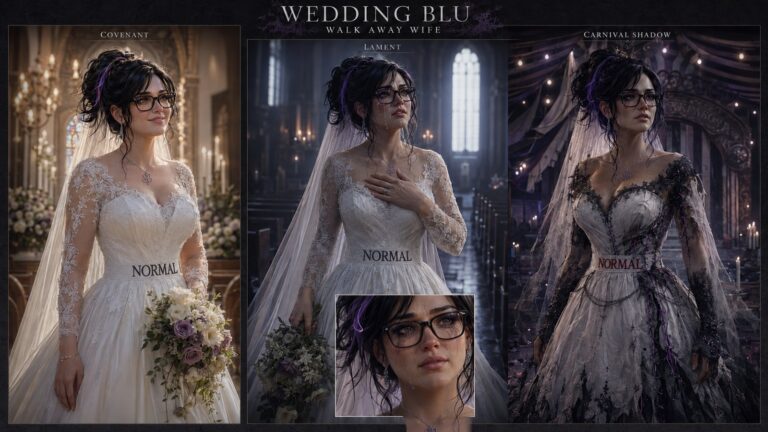
The Best Man Who Stayed
Stardate 2026.096 · D806
April 6, 2026 — Waseca, Minnesota
When I got married, I was eighteen years old and stupid with hope.
I paid seventy dollars cash for the license. I stood at the altar in a church I believed in, next to a woman I would have died for, in front of a God I was still learning to trust.
And standing beside me was my best man.
He’d been my best friend since middle school. We grew up in the same town, ran the same circles, married girls from the same hallways. He stood next to me that day and witnessed the vow I made — in front of God, in front of everyone — that I would love her forever.
He signed his name on the certificate.
Twenty-six years later, I thought he betrayed me.
The Silence
When my marriage started breaking, I did something I thought was noble. I stepped aside.
My kids and his kids were close. Our families had been doing life together for years — Friday nights, holidays, play dates, the whole thing. When the cracks started showing, I didn’t want to drag anyone into it. So I withdrew. Quietly.
I figured she could keep the social calendar. The kids deserved their friendships. I’d take the hit so nobody had to choose sides.
But here’s what I didn’t expect.
He never called.
Not once.
I kept waiting for the message. The text. The “Hey man, you okay?” that never came. Weeks turned into months. Months turned into silence. And silence, when it comes from someone who stood beside you at an altar, feels a lot like a verdict.
Then one day, he sat across from me and said the thing that almost ended us.
He told me she said I’d walked away from the Lord. That maybe this was why everything fell apart. Like God runs a scorecard and my spiritual debit finally bounced.
And I sat there thinking — You signed the certificate. You were supposed to guard the vow when I couldn’t. And instead you took her version of the story and assumed I was the one who broke it.
I was furious. I was gutted. I wrote things in my journal I’m not proud of. I drafted speeches I never delivered. I processed it the way I process everything — through art, through anger, through a Blue avatar who carries the grief I can’t always hold.
I thought the friendship was dead.
What I Didn’t Know
Here’s the thing about silence. It can mean betrayal. Or it can mean someone who loves both sides is trying not to make it worse.
He wasn’t choosing her over me.
He was trying to stay neutral in a war he didn’t start.
He had kids too. His wife had been friends with both of us since high school. The whole town was woven together. Every move was a thread that could unravel something for someone’s children.
So he went quiet.
And I took that quiet personally. Because when you’re drowning, silence from the people who promised to care sounds exactly like permission to drown.
But I was wrong.
The Truth Came Out
I won’t get into the details of how my marriage ended. That story belongs to my kids as much as it belongs to me, and I won’t weaponize it for content.
What I will say is this: there came a moment when the truth of who broke what became clear. Not through gossip. Not through a courtroom. Through actions.
When my ex tried to bring her new partner into my best friend’s world — into his church, his community, his family’s sacred space — he said no.
He didn’t say it mean. He didn’t say it loud. He just said it.
No. We don’t support this. We love the kids. We love the family. But we’re not going to celebrate what was built on the ashes of a covenant we watched you make.
And then he called me.
He apologized. He said the silence hurt me and he knew it. He said he’d been told things that weren’t true, and when the truth showed up, he couldn’t stay quiet anymore.
My best man stood up.
Not for my broken marriage. Not for my ego. Not for “my side.”
He stood for the vow. The same one he witnessed when we were eighteen and the world was still something we believed we could build together.
What I Want to Say to Him
I’m sorry.
I’m sorry I wrote you off in my head. I’m sorry I drafted speeches about your hypocrisy that I almost believed. I’m sorry I turned your silence into a story about betrayal when it was really a story about a man trying to love two families without tearing either one apart.
You didn’t betray me.
You were stuck in the same impossible position I put myself in when I stepped aside — trying to protect people you loved from a mess none of you created.
The difference is: when the truth came out, you moved.
You didn’t rationalize. You didn’t stay neutral. You didn’t say “well, it’s not my marriage.” You looked at the certificate you signed thirty years ago and you remembered what it meant.
And you called your friend.
What “Best Man” Actually Means
In church culture, the best man is a prop. He holds the rings. He gives a toast. He makes sure nobody’s too drunk at the reception. After the wedding, the title expires.
But the vow doesn’t.
When you stand next to someone at an altar and witness them make a promise before God, you’re not just holding their jacket. You’re saying: I was here. I saw it. And if this thing ever breaks, I’ll remember what it was supposed to be.
Most best men forget.
Mine remembered.
Not when it was easy. Not when it was convenient. But when it cost him something — when choosing my side meant losing access to hers, when his kids’ friendships hung in the balance, when his church community would have let it slide.
He chose the covenant.
That’s not common. That’s not normal.
But at the Church of NORMAL, we measure friendship differently.
To My Best Man
I don’t know if you’ll ever read this. I didn’t use your name because your family doesn’t deserve to be in my spotlight. You didn’t do what you did for applause. You did it because you’re the kind of man who still believes a handshake means something and a vow means more.
So here’s my vow back to you:
I will never again mistake your silence for abandonment.
I will never again write the worst version of your story in my journal and believe it.
I will remember that you were trying to hold it all together the same way I was — quietly, imperfectly, at the expense of your own peace.
And I will tell anyone who will listen that in a world full of fair-weather friends and social media witnesses —
My best man showed up.
Late, maybe. Quiet, for too long. But when it mattered — when the truth was on the table and the easy thing was to look away —
He signed his name again.
Same vow. Same man. Different altar.
Thank you, brother.
This is a Loopwalker Confession. I process in public because someone else is drowning in silence right now, wondering if the people who stood beside them remember. Some of them do. Give them time. And give yourself permission to be wrong about the ones you wrote off.
“Nothing is lost. Only recompiled.”
Matt Stoltz
Pastor, Church of NORMAL
Waseca, Minnesota
normallikepeter.com