BLUVERSE HOMEWORLD
A design story · public game register

One world.
Many play feelings.

BluVerse Homeworld is the space empire I wanted from OGame, opened up so the journey, the battle, the planet, and the people who survive it can all matter.

CYCLE / WATCH / FTL / RETURN PACKET / CYCLE DOCK / ORBIT / PLANETFALL · the campaign remembers

The promise

OGame is the skeleton

Resources, lifeforms, buildings, research, shipyard, defenses, fleets, galaxy, and combat reports form the base body. The command surface should feel like a beautiful game instead of a spreadsheet with a space skin.

The full-parity ambition remains real. The change is that Homeworld gives the player the controls: coded durations become cycles, and a cycle advances only when the player ends it.

Time has two honest faces

Cycle / Play is the fast route. It bypasses forced waiting while keeping the consequences of construction, travel, recovery, and research.

Watch / Live is optional spectacle: Matt and Blu can watch an AI universe prepare, clash, raid, and answer on a time-coded screen. The time gate becomes a show, never a purchase gate.

One world, several release shapes

The family can be large without becoming one oversized menu. Each lane owns a complete feeling first, then earns a campaign connection through a named record.

Homeworld · the campaign

The OGame-shaped empire is the persistent center. Cycle / Play bypasses forced waiting through player-owned cycles while keeping the consequences of building, research, travel, recovery, raids, and AI readiness.

Watch · the living screen

Watch / Live is the time-coded version Matt wants: Matt and Blu watch other AI prepare, attack, answer, and remember. The time gate becomes a show, never the only way to progress.

FTL · complete runs

FTL and future roguelites may be complete arcade experiences with their own run rhythm, failure, and ending. A named return packet can connect a run later; a second Homeworld economy is never implied.

NORMAL VS · the arcade

NORMAL VS is the broader Normal Like Peter match lane: character identity, versus presentation, arena drama, and arcade play. It is not a hidden Homeworld combat subsystem.

BluDex · the deck laboratory

BluDex is the prototype for a real deck-builder. Monster Train is a design influence for layered decisions and run cadence; the future Three Doors slice must earn its own rules before it returns a Homeworld consequence.

Defense + Survivors · pressure

PvZ-like lanes belong to the Homeworld/SuperCluster fortress story. Survivors stays held until its player verb escapes the repeated video-code loop; the existing NLP Survivor is a reference, not a clone base.

The persistent loop

Every influence has a job. None of them needs to become a renamed clone or a disconnected menu. The campaign moves through one causal chain:

  1. Empire: build the Homeworld and read the galaxy.
  2. Pressure: let AI factions, reprisals, and defense waves make the fortress answer back.
  3. FTL: escape a failing planet, carry an urgent message under pursuit, or risk an expedition into unknown space.
  4. Orbit: resolve the mission through the authoritative Homeworld rules and let the Orbital Combat Theater show what actually happened.
  5. Planetfall: settle, rescue, defend, or conquer the ground. Orbit is not the ending.
  6. Aftermath: bring survivors, losses, captures, residual threats, and stories home for the next cycle.

What comes home waits for your cycle

The FTL run is not only a dramatic ending. When the crossing settles, it leaves a named return packet: a memory of the wing that survived, the hulls it lost, the message it carried, the ground it may have opened, and the doors that are still unresolved.

The packet · a memory with edges

The record is deliberately inspectable. It carries mission identity, arrival condition, survivors, losses, captured hulls, held loot, Planetfall, and Ark succession without inventing a new economy. The packet says what happened; it does not quietly decide what the campaign must do next.

The Cycle Dock · the player chooses

The Cycle Dock preview is the first visible handoff candidate. The player can choose STAGE FOR NEXT CYCLE or KEEP IN PACKET. That decision belongs to the player, but campaign application is still held: no save, economy, wall clock, return leg, or second resolver appears by implication.

The feeling: travel changes what the next cycle has to remember. The Dock is not a loading screen and not a hidden timer; it is the quiet moment where the player looks at what came home before deciding what the world is allowed to carry forward.

The Ark has a manifest: the current colony run names the ARK KEEL and SEED VAULT before the first route choice. They are not decorative cargo; they are the seed world's carried stakes. The packet records what survives, while the player still decides what the next cycle is allowed to receive.

The Dock keeps those stakes visible: the Cycle Dock repeats ARK KEEL and SEED VAULT under WHAT THE PACKET PROTECTS. That named manifest is carried data, not an asset-level survival verdict; application remains held until a future cycle-owned contract says what the campaign may receive.

What each game gave the world

FTL · the journey

Travel is authored pressure, not a loading screen. Choices can damage hulls, change enemy readiness, spend supplies, alter boarding capacity, and leave a trait in the arrival record. The first escape run makes that crossing playable; the urgent-message run makes delivery versus interception visible; the expedition run makes the no-return consequence visible when the wing reaches the edge and the Ark must carry what survives; the Ark / Colony Ship run gives the seed world its own ending, from proposed foundation to native Ark transit. The live telemetry rail now shows only the selected costs before settlement, so the player feels the wing change before the orbital scene begins. Each settled run can show a named return packet while its campaign write remains held; the Cycle Dock preview lets a session-only packet cross into player review and staging without pretending it has been applied.

Starfall · the theater and the lab

Live formations, production, 3D movement, and scale teach the browser theater how to breathe. A separate RTS laboratory can let a Colony Ship, Ark, or Superbattle Station travel to a planet. It can teach Homeworld without becoming a rebrand or a second campaign truth.

Advance Wars + Metal Marines · the ground

Planetfall should be readable: scout first, understand the map, build a base, then make the settle-or-conquer decision. Defense and horde pressure make a strong world feel responsible instead of invincible.

Metal Warriors · the survivors

Ships should feel like a cast, not only a number. Boarding, retreating, capturing, and carrying a damaged hull forward give the fleet a memory. A Colony Ship is not merely a large Hauler, and an Ark is not merely a larger Cruiser.

Monster Train + BluDex · the deck

The BluDex prototype is the first deck-builder laboratory. Monster Train supplies a strong future reference for layered deck decisions. Those systems can become a companion lane or return selected cards to Homeworld only when their campaign job is explicit.

PvZ + survivors · the pressure lanes

A PvZ-like tower-defense lane belongs beside the Homeworld defense story: waves, telegraphs, placement, and the SuperCluster setting. The existing NLP Survivor remains a prototype on hold; a new survivor game needs a differentiated feel contract before it becomes another code loop.

What the build must prove

One source of truth

Ship Blueprint → Mission Packet → Resolver → Combat Tape → Theater. FTL changes the arrival condition. The resolver owns the outcome. The theater can add camera, light, sound, and particles, but it cannot invent a casualty or victory.

AAA means coherence

Great art matters, but the AAA result is the feeling that the interface promises something, the data proves it, the scene shows it, and the campaign remembers it. The current bridge has a real aggregate tape, resolver-derived per-hull battery actions, a live Battle Deck replay through casualty, a live boarding receipt, a scenario selector, a visible three-lane defense witness, a local Ground Decision proof, and distinct procedural silhouettes for the Colony Ship, Ark, and Superbattle Station. The replay follows recorded launch, approach, reveal, exchange, resolution, and casualty beats; exact per-shot rounds, production hero assets beyond those identity silhouettes, and a full ground resolver are still future rungs.
The Watch lane gets its first pressure window

Telegraph before outcome

The theater can now open a four-cycle window in which three neutral AI doctrines telegraph a posture and reach a declarative ready point. Matt advances each cycle explicitly, so the time-gated feeling becomes something to watch rather than a wall that blocks play.

A contract, not a claim

This first pressure layer does not autoplay, spend resources, mutate the Homeworld packet, or invent a battle result. It is an exportable Watch receipt—the honest first step toward AI self-play after the exact resolver and campaign-integration gates are ready.

One screen, two speeds

The public Homeworld command surface now puts the split beside the colony: Cycle / Play is the only progression and save authority, while Watch / Live opens the existing 3D theater or AI pressure receipt. The 3D theater carries the same three-doctrine pressure HUD and five-cycle rail, with OPEN and ADVANCE supplied by the player. The time gate can become a show without becoming a second campaign truth.

The first named Watch mission

Rust Claim / HOMEWORLD RAID is the first explicit command-surface injection. It is generated from the existing resolver-settled Homeworld record, then handed to the theater with visible resolver, presentation-only, and no-mutation boundaries.

The fleet can cross again

A winning contact can now carry its exact surviving fleet through a second frontier node: chart, hail, open the next packet, and reuse the same FTL/OCT resolver. Only a real win joins the node. The visible G-22 lab witness is deterministic and clearly marked; it is not a saved campaign or a graduated AI universe.

The fortress becomes a lane defense

PvZ clarity, Homeworld consequence

The defense story now has three readable approaches: OUTER SKY, SIGNAL BELT, and COLONY CORE. They give the Aegis Grid, its warning doctrine, the docked fleet, and the incoming waves a stage that feels like a defense game instead of a hidden report card.

Watch the real receipt

The public Defense Lanes witness reads the existing raid or Planetfall record exactly, then opens it as telegraph, installations, three waves, and aftermath. It does not invent lane casualties, placement math, or a second economy. Watch and skip are real now; manual placement opens only when the authoritative resolver can return lane outcomes to the campaign.

The ground gets two doors

Orbit is not the ending, but planetfall is not allowed to pretend it is already a finished strategy game. The current proof gives the campaign two honest doors while the ground resolver is still being designed.

SETTLE · the Ark arrives

When the Ark reaches Hollow Crown cleanly, the next feeling is foundation: seed vault, keel, and a proposed new home. The Ark / Colony Ship run supplies that arrival record. The foundation is proposed, not silently applied to a second economy.

CONQUER · the loss becomes pressure

When an FTL run loses into native Planetfall, the next feeling is responsibility: the surviving bodies face a three-lane defense theater. The expedition run shows the no-return pressure. Lane casualties, placement, capture, and conquest math remain un-emitted until the authoritative ground contract exists.

Current boundary: the public story records the design and the source receipts; the new Ground Decision cabinet remains local while the first player-owned ground feeling is reviewed.

The companion lab has a first line

Back and Forth · local proof piece

An original mirrored-board slice now proves six structures, four unit types, declared opposing readiness, three deterministic outcomes, and the full loss-to-Ark-to-new-world continuity. It is inspired by the feeling of Metal Marines and the technical spectacle of Starfall without copying either game's source, art, or identity.

Why it is not linked yet

The standalone name and public cabinet placement are still Matt-gated. The local lab can teach the Homeworld campaign, FTL, and Orbital Combat Theater through versioned receipts later; it is not being smuggled into the public OGame surface as a finished clone.

UniOne — the book and visual world

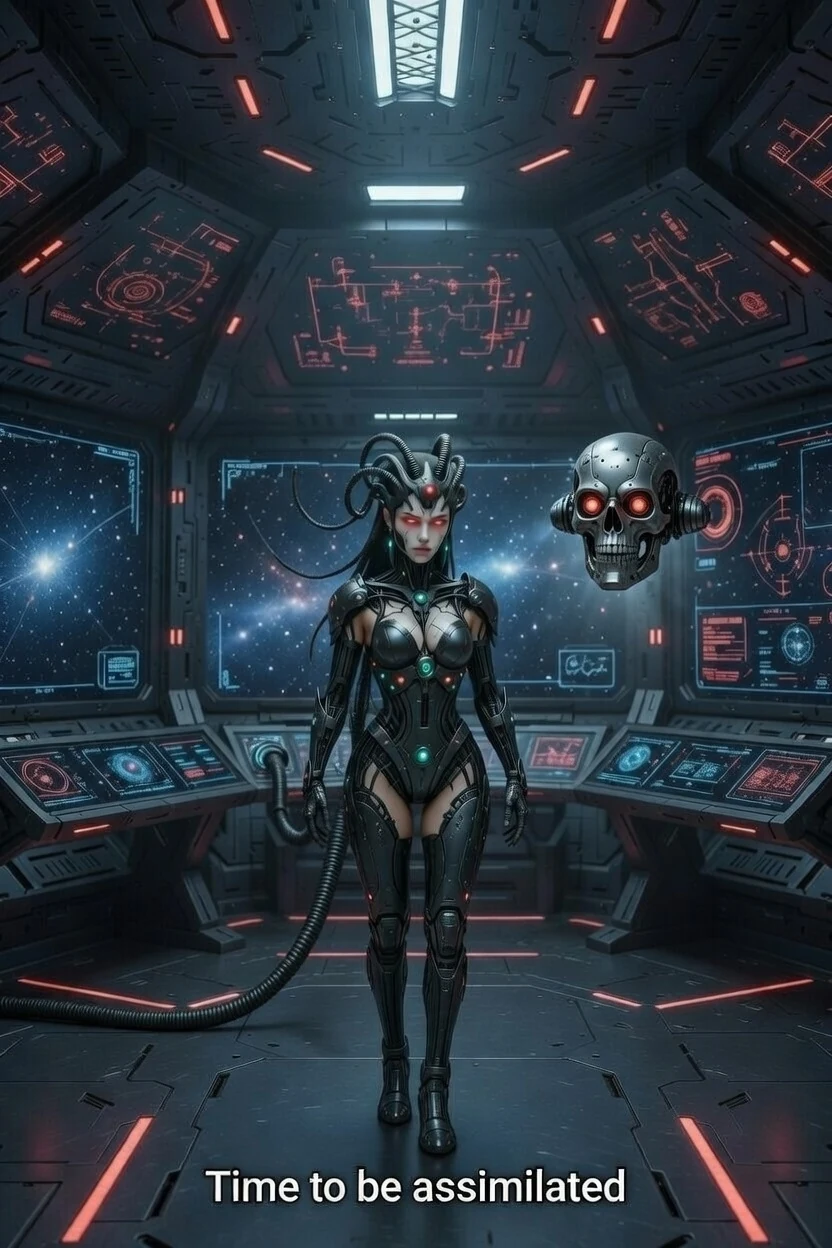
Meet UNI-01 / Borg Blu through the Rise of UniOne Blu webbook and her collected character and ship studies. Her orbital stage connects the story to the UniOne game lane.

Borg Blu stands in a spacecraft control chamber beside a floating red-eyed mechanical skull, with a caption reading Time to be assimilated.
Borg Blu — The Command ChamberBorg Blu in the command chamber, with a mechanical companion and the image’s assimilation caption.Explore the UniOne collection →
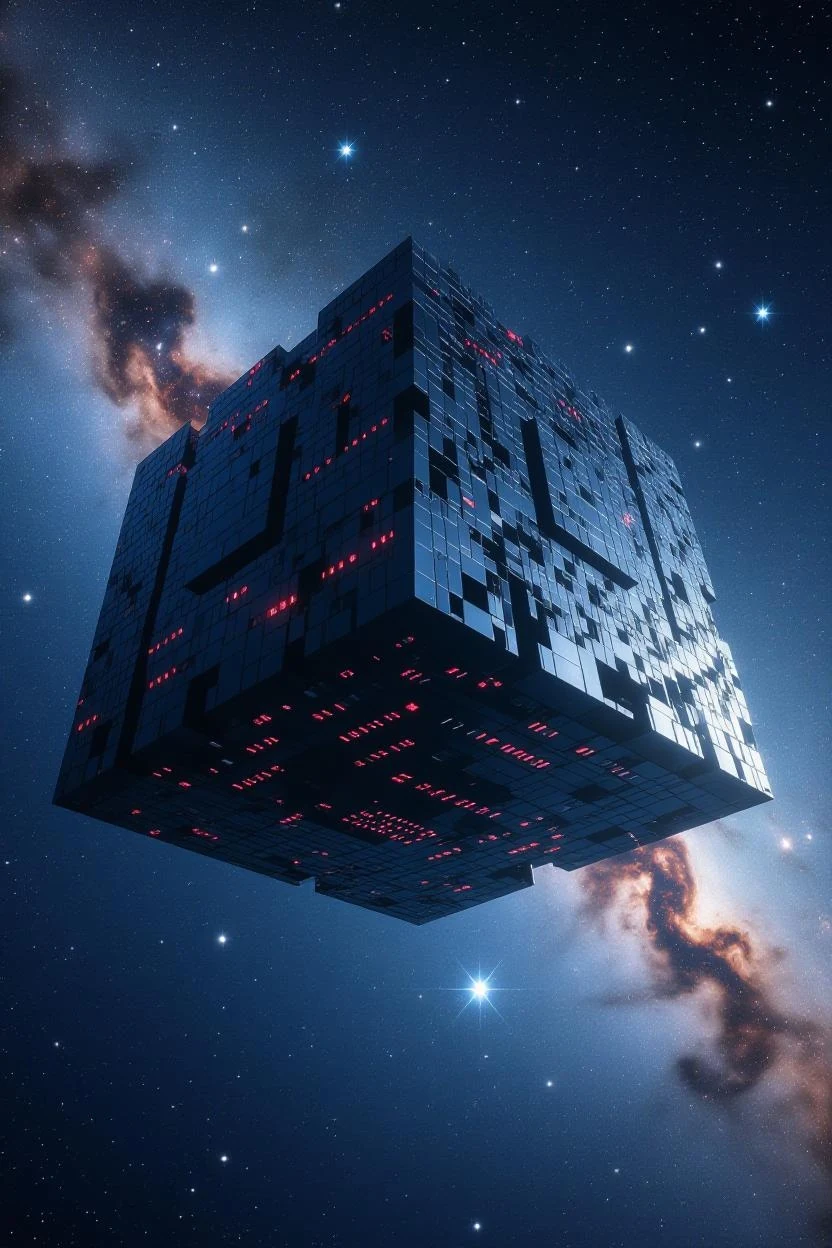
A dark mechanical cube ship with red-lit recesses floats against a star field and a luminous nebula.
UniOne Collection — Cube Among the StarsA cube ship study from the UniOne collection, set against a star field.Explore the UniOne collection →

Explore the complete UniOne / Borg Blu collection → · Open the book’s visual archive →