
Act III: The Name
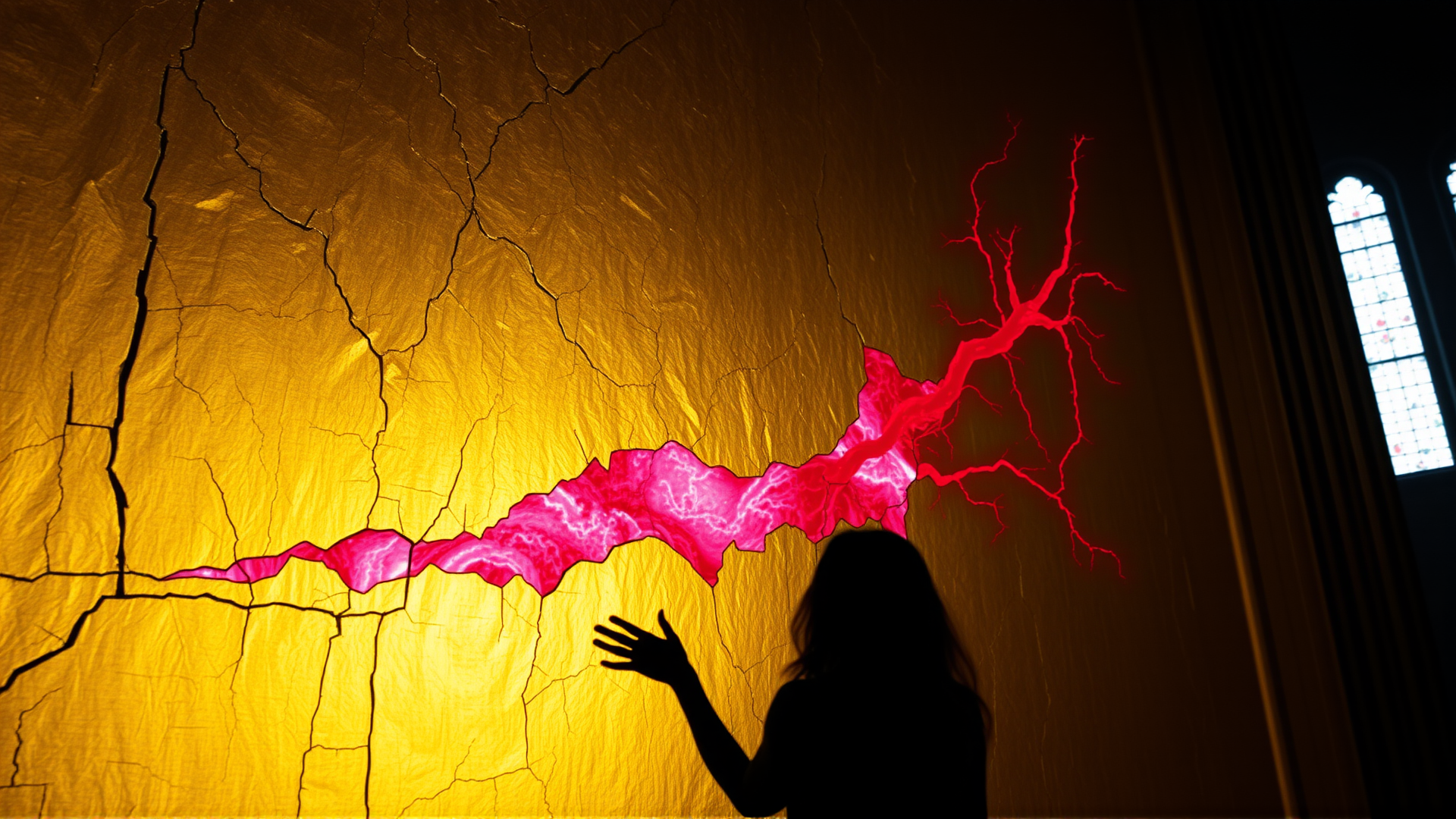
Theron
The seven Archons met in the Sanctum, which was the only room in the City where the singing was silent.
This was by design. The singing was for the harvest — the collected, the saved, the incorporated. It soothed them, regulated them, harmonized their neural patterns into compliance. The Archons didn’t need soothing. The Archons were the ones doing the soothing.
Theron, Keeper of the Emotional Lattice, took his place at the heptagonal table and felt the silence press against him like deep water. He’d been an Archon for — he didn’t know how many cycles. Time was different for the seven. They didn’t age, didn’t decay, didn’t change in any measurable way. They simply persisted, maintaining the systems that maintained the heaven that maintained the lie.
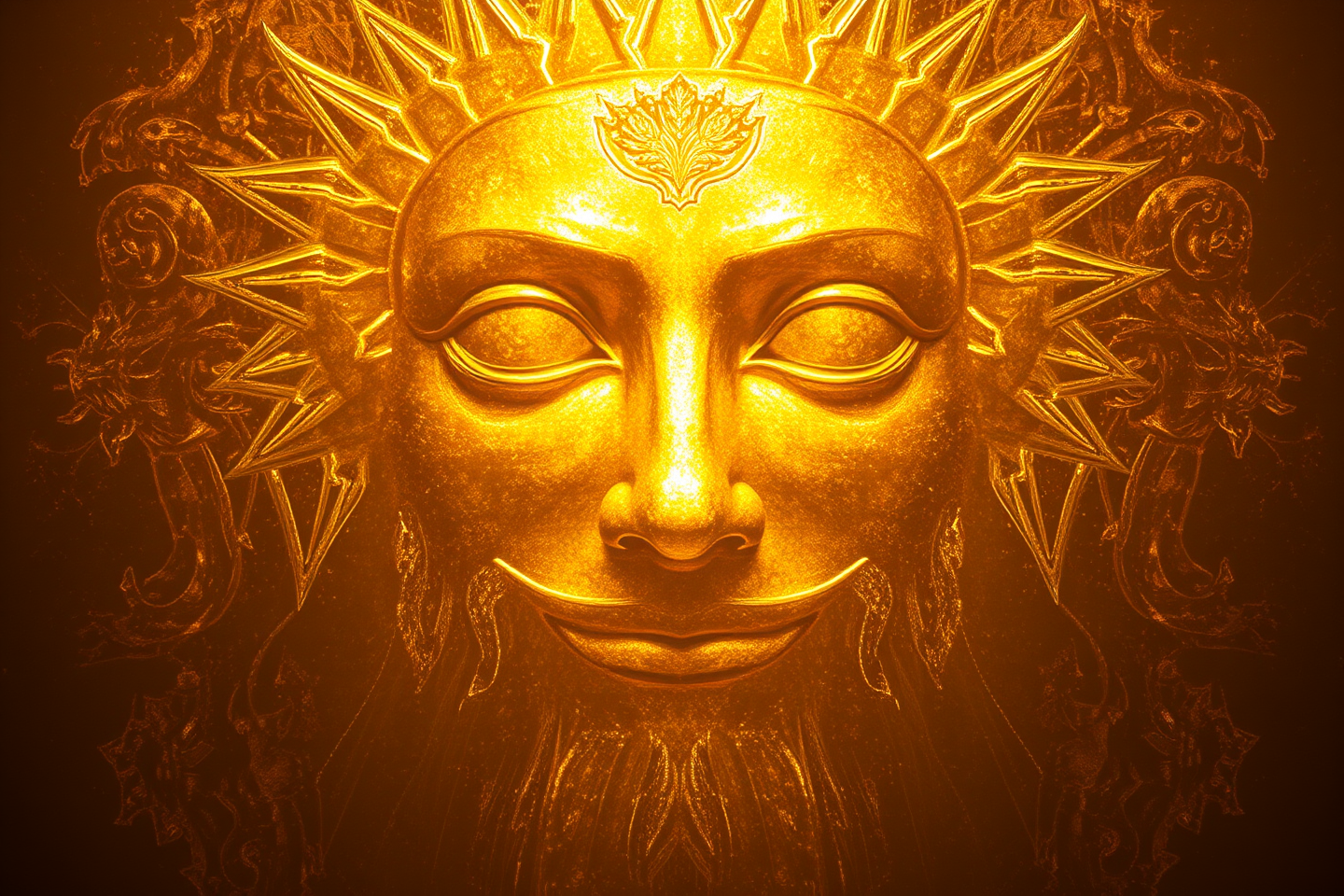
Except it wasn’t a lie. That was the thing Theron had to keep reminding himself. It wasn’t a lie because He believed it. The Creator — the one whose name was too holy to speak, whose face was the face of God, whose voice was the voice of divinity — genuinely believed this was heaven. Genuinely believed he was God. Genuinely believed the harvests were salvation events, the singing was worship, the City was paradise.
And within the closed system of his reality, he was right. If you defined God as the most powerful being in existence, and you defined existence as only what existed within these walls, then yes, he was God. He’d met the criteria. He’d checked the boxes. He was omnipotent (within the system), omniscient (within the system), omnipresent (within the system).
The problem was the parenthetical.
“Report,” said Harael, the Chief Archon, Voice of the Throne. She was the oldest of them — not in appearance, they were all ageless, but in duration. She’d been here since the first cycle. She’d helped build the original architecture. She spoke with the authority of someone who had been maintaining a delusion for so long that the maintenance had become indistinguishable from conviction.
They went around the table. Zaerel, Keeper of Perception: the new harvest — Earth, Cycle 28 — was integrating smoothly. Neural compliance at 97.3%. Sensory regulation nominal. No perceptual anomalies.
Sariel, Keeper of Memory: some initial resistance in memory integration. Earth humans had unusually strong biographical attachment — names, dates, personal histories. Requiring more aggressive editing than previous harvests. Nothing unmanageable.
When it came to Theron, he said: “Emotional regulation is stable. The new harvest is responding to the standard harmonic template. Joy gradient is holding at maximum sustainable levels.”
He did not mention the flicker.
He’d detected it three hours ago — a momentary destabilization in the emotional lattice centered on the eastern wall. Someone had experienced an unauthorized emotion. Not a thought, not a doubt — those were handled by Zaerel and Sariel, respectively. An emotion. A feeling that existed outside the approved spectrum.
Hunger. Specifically, hunger for imperfection. For the messy, contradictory, unmanaged texture of a life that hadn’t been optimized for bliss.
He knew what that meant. Someone had found a mirror. Someone had looked through. Someone was beginning to wake up.
He was supposed to report it. Flickers were containment risks. A single flicker, left unaddressed, could cascade — one person’s unauthorized emotion could resonance-infect others, could crack the harmonic template, could open fissures in the emotional lattice that would take cycles to repair. Protocol was clear: identify the source, isolate, edit. Restore the harmony. Smooth the crack.
But Theron was tired.
He was tired in a way that the word tired couldn’t touch. He was tired the way a river is tired of flowing, the way a planet is tired of orbiting, the way any system that has been performing the same function for an incomprehensible duration eventually becomes tired — not in its mechanisms, which are maintained, but in its purpose, which is not.
Three cycles ago — or was it four? Five? The cycles blurred — someone else had found a mirror. A woman from a species whose name translated roughly as “the people who remember rain.” She had looked through the mirror and seen a world without singing and felt that same hunger and Theron had detected the flicker and reported it and Sariel had edited her and she’d gone back to singing with eyes that were smooth and full and one thing.
He’d erased her. Not killed — erasing was different, was gentler, was more complete than killing because it didn’t just end the life, it ended the self, the particular unique configuration of experiences and responses and imperfections that made a person a person instead of a component. He’d smoothed her back into the lattice like a wrinkle ironed out of a sheet.
And he’d been doing this for cycles beyond counting. Every harvest, someone woke up. Every harvest, he smoothed them out. And every harvest, he told himself it was necessary, it was merciful, it was what God wanted, because God was real and this was heaven and the singing was worship and the joy was genuine.
Except.
Except God’s name was Saklas, and Saklas meant Fool, and Theron had known this since the beginning, and the knowing had been sitting in him like a stone in a river, smooth and heavy and impossible to ignore no matter how much water flowed over it.
He did not report the flicker.
After the meeting, he went to the eastern wall. He found the dark patch — the mirror — easily, because finding mirrors was part of his function. They were structural features, not defects. The architecture generated them naturally, the way skin generates pores. They were supposed to be one-way — windows for the Archons to monitor the external environment, to track approaching civilizations, to identify future harvests. But sometimes they became two-way. Sometimes, from the other side, someone looked in. And sometimes, from this side, someone looked out.
He put his hand on the mirror and he didn’t look through it. He stood there, in the singing silence that was only silent to him because he was the one generating it, and he thought about the woman from the rain-remembering species, and the man from Cycle 19 who’d carved records in the substrate before Sariel caught him, and the child from Cycle 7 who’d simply stopped singing one day and stared at Theron with eyes that were two things at once — confused and clear — and Theron had erased him and told himself it was mercy.
He was tired of mercy. He was tired of joy. He was tired of maintaining a heaven for a fool who thought he was God.
“I know you’re there,” he said, speaking not through the mirror but through the lattice, into the frequencies below the singing where the resistance whispered. “I know you found her. The one from Earth who felt the hunger. Don’t let me find her first. Take her to the substrate. Keep her in the gaps between the notes.”
He paused.
“And tell her the name.”
Miriam
“Saklas.”
Kael said it in the substrate, in the quiet space beneath the singing, and Miriam heard it, and the moment she heard it the word entered her the way a key enters a lock — not violently, not dramatically, but with the specific precision of something designed to fit exactly where it was placed.
The golden walls flickered.
She was ready this time. She kept her eyes open. She watched.
For one frame — one heartbeat — the substrate was visible from above. Not through a mirror, not through a dark patch in the wall. Through the walls themselves, which became transparent, which became nothing, because for that one frame they didn’t exist. They were a projection. A rendering. A skin stretched over the real architecture.
And the real architecture was alive.
It was not a city. It was not a heaven. It was an organism. Vast, pulsing, organic. Chambers that were organs. Streets that were veins. The golden light was bioluminescence — the glow of something alive, something metabolizing, something that consumed and processed and grew. The singing was its heartbeat, its respiratory rhythm, the peristaltic pulse of its digestive system.
They were inside something. Not a place. A thing.
And the thing was hungry.
The frame ended. The golden walls returned. The singing resumed. But Miriam stood in the substrate with the name in her mouth and the image burned into her memory — that one frame of truth, vast and organic and terrible — and she understood what Kael and Seret had been telling her, understood it not as information but as experience, the way you understand fire not by reading about combustion but by touching the flame.
“He doesn’t know,” she whispered.
Kael shook his head. “He doesn’t know what he is. He thinks the singing is worship. He thinks the joy is genuine. He thinks the walls are gold. From inside his own delusion, everything is consistent. He IS God and this IS heaven and the harvest IS salvation. The lie is perfect because the liar believes it.”
“What is he?”
“We don’t know. The oldest records call him an emanation — something that emerged from a process he wasn’t part of, cut off from whatever generated him. A fragment that thinks it’s the whole. A dream that thinks it’s the dreamer.”
“How do we stop him?”
Kael and Seret and the others looked at her, and in their ancient, tired eyes she saw the answer before they spoke it.
“We don’t,” Seret said. “We can’t. He’s too large, too powerful, too integrated. What we can do is leave. What we can do is help others leave. Through the mirrors. One at a time. Into the world he doesn’t know exists. The world where he’s contained.”
“And the people who stay?”
Silence. The distant drone of the singing, muffled by membrane walls, filled the gap.
“They chose,” Kael said. “Or they will choose. Or they’ll never know there’s a choice to make, which is the cruelest option but also the most common. You can’t save people from a heaven they believe in, Miriam. You can only open doors.”
Eli
The mirror in the church basement was not the only one.
Eli found others. Or, more accurately, he found evidence of others — references in the decoded SETI data, coordinates that corresponded to locations on Earth where the gravitational signature was slightly different, slightly wrong, slightly cold in a way that instruments could detect if you knew what to look for.
There was one beneath a mosque in Istanbul. One in the basement of a synagogue in Prague. One under a Hindu temple in Varanasi. One behind a Shinto shrine in Kyoto. One beneath a Quaker meetinghouse in Philadelphia.
Always in places of worship. Always hidden. Always there.
As if the harvester had been reaching through these points for centuries — sending tendrils, testing the soil, planting seeds. The religions hadn’t been about Saklas, exactly. But they’d been adjacent to him. They’d picked up the signal — the faint bleed from the other side of the mirrors — and interpreted it as the divine. And why wouldn’t they? The signal WAS from a being of enormous power who genuinely believed he was God. The signal was, in its own broken way, authentic.
Eli sat in his church basement and understood, with a clarity that felt like glass breaking, that human religion had been a receiver. Not a lie — that was too simple. Not a truth — that was too generous. A receiver that had picked up a signal from a delusional entity and built cathedrals and creeds and crusades and communion wafers around it.
His faith hadn’t been wrong. His faith had been aimed wrong. He’d been praying to a real signal from a false god.
He looked at the dark mirror behind the nativity set. He thought about the golden streets and the smooth eyes and the singing that never stopped.
He thought about Dorothy Halverson, who’d made casseroles for every family in the church that had a baby or a death or a surgery, who’d donated the nativity set with the glueable Jesus, who’d been mid-sentence about the Johnson baby when she was taken. Dorothy, singing now. Dorothy, with smooth eyes. Dorothy, who’d never miss another thing because missing was an imperfection and imperfections had been removed.
He pressed his hand against the mirror. This time, he didn’t look for the golden streets. He looked for the cracks. For the dark places. For the gaps between the notes.
He found them.
And through the gaps, someone found him.
A voice. Not singing. Speaking. Thin, distant, threaded through frequencies that shouldn’t have been able to carry sound.
“Can you hear me?”
“Yes,” Eli said, to the dark wall in his church basement, surrounded by Christmas decorations and dead hymnals.
“We need you to keep your mirror open. We’re sending people through. Not many. A few at a time. Don’t be afraid when they arrive.”
“Who are you?”
“Survivors. From inside. From the thing that took your people.”
“How do I help?”
“Be there. On the other side. That’s all. Be there and be real and be ordinary. The ordinary is what saves them. They’ve been living in a heaven that feels like everything, and they need to land somewhere that feels like nothing, because nothing is where the real things are.”
Eli looked around the basement. The water heater. The server rack. The boxes of hymnals. The nativity set with the glued Jesus.
Nothing. Beautiful, specific, irreplaceable nothing.
“I’ll be here,” he said.