CPTSD 101
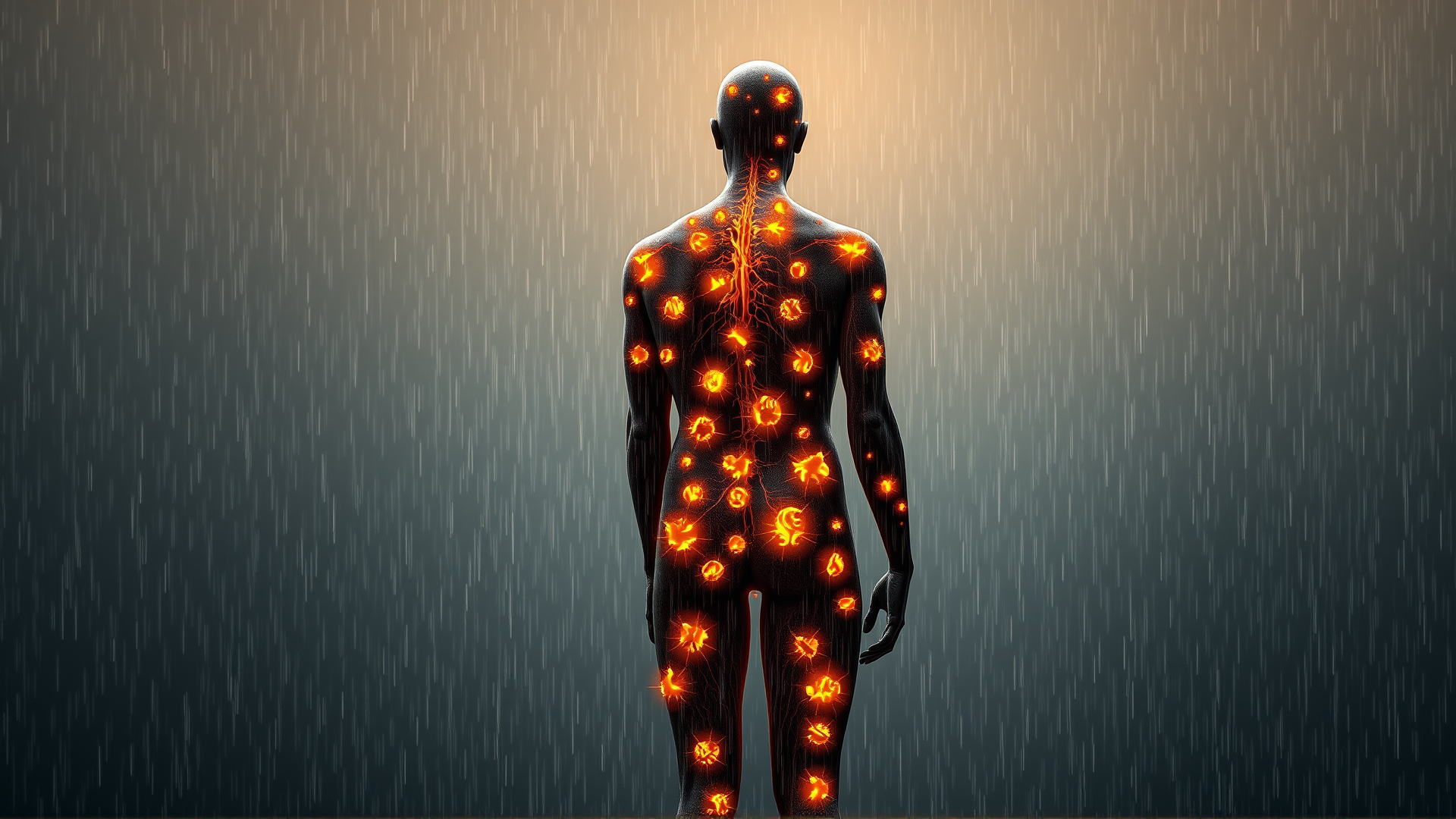
A foundational explainer on Complex PTSD — what it actually describes, why it feels relational, and how healing works at the nervous-system level.
Explainer — Clinical Framing
What CPTSD Actually Describes
Complex PTSD (CPTSD) is not a character flaw. It is not weakness. It is not “too much.”
CPTSD is what happens when a nervous system adapts to prolonged emotional threat, especially in environments where escape, repair, or safety were inconsistent or unavailable.
At Normal Like Peter, we talk about CPTSD as a patterned survival response — not an identity and not a diagnosis.
CPTSD is a framework used to understand how long-term stress and relational trauma shape:
- Emotional regulation
- Attachment and bonding
- Threat perception
- Memory and time awareness
- Self-concept under stress
These responses were protective once. They only become painful when the environment changes but the nervous system hasn’t caught up yet.
Common CPTSD Patterns (Non-Diagnostic)
People with CPTSD may experience:
- Hypervigilance — constant scanning for danger or shifts in mood
- Emotional flooding or sudden shutdown — overwhelming emotions, or sudden numbness and detachment
- Strong reactions to perceived abandonment or rejection — intense fear or distress even when no abandonment is occurring
- Difficulty trusting repair to last — even when things are calm, the body knows it’s temporary
- Shame spirals that appear “out of nowhere” — sudden overwhelming feelings of being fundamentally defective
- Age-freeze — feeling older than their age, or frozen at a younger one
These are patterns under stress, not personality traits.
CPTSD vs. Labels
CPTSD is often misunderstood because its outward expressions can resemble other clinical labels.
At Normal Like Peter, we are explicit:
We describe patterns, not personalities.
Under stress, many humans temporarily display traits that get mislabeled as disorders. That does not mean the person is that disorder.
This site does not diagnose anyone — including you.
Why CPTSD Feels Relational
Most CPTSD wounds were formed in relationship, not isolation.
That’s why CPTSD often activates most strongly in:
- Romantic bonds
- Family systems
- Authority dynamics
- Spiritual or community spaces
The nervous system learned its rules there. It also relearns safety there — slowly, with consistency.
Healing Is Not “Fixing Yourself”
CPTSD recovery is not about becoming tougher, quieter, or more agreeable.
It is about:
- Teaching the nervous system what now is
- Restoring accurate threat detection
- Building tolerance for calm
- Learning repair instead of collapse
Progress often looks boring from the outside — fewer spikes, shorter loops, quicker recovery.
That’s healing.
Normal Like Peter — The NST Section
How Normal Like Peter Approaches CPTSD
We use:
- Narrative reflection (Captain’s Logs)
- Pattern language instead of diagnoses
- Humor and satire as pressure-release valves
- Theology without shame
- Systems thinking instead of blame
This is education and storytelling, not therapy.
If you are working with a licensed professional, our content may help you name what you’re already noticing — nothing more.
A Public-Use Boundary (Important)
This page exists to help people understand themselves, not to label others.
Please do not use CPTSD language from this site to:
- Diagnose a partner, ex, or parent
- Win arguments
- Justify staying in harm or causing harm
- Rally others against someone
If you’re unsure what’s real, bring your experiences — not labels — to a qualified professional.
If This Page Resonates
That doesn’t mean something is “wrong” with you.
It usually means:
- Your nervous system learned early
- You adapted well
- And now you’re noticing the cost
Awareness is not collapse. It’s the beginning of choice.
CPTSD and BPD: Where the Overlap Happens
And why labels get misused
CPTSD and Borderline Personality Disorder (BPD) are often confused — not because they are the same, but because nervous systems under chronic relational stress can look similar from the outside.
This section exists to reduce harm, not to sort people into boxes.
The Shared Territory: What Overlaps
Under threat or abandonment stress, both CPTSD and BPD frameworks may describe patterns such as:
- Intense fear of abandonment
- Emotional swings that feel sudden or overwhelming
- Strong attachment bonds formed quickly
- Difficulty trusting stability to last
- Shame, self-blame, or identity confusion under stress
- Rapid shifts between closeness and withdrawal
These are state-based nervous system responses, not proof of a fixed identity.
Why Mislabeling Happens So Often
Mislabeling usually occurs when:
Context is removed Observers see behavior but not history, triggers, or power dynamics.
Stress states are mistaken for traits What appears “constant” is often situational and relational.
Diagnosis becomes shorthand for pain Labels get used to explain confusion, not to support healing.
Relational trauma is collapsed into character judgment Especially in breakups, family conflict, or online commentary.
This is why we say: Traits under stress are not identity.
A Key Distinction (Without Diagnosing)
While this site does not diagnose, a common educational distinction used in trauma-informed spaces is this:
- CPTSD frameworks emphasize adaptation to prolonged threat
- BPD frameworks emphasize patterns of emotional regulation and identity under relational instability
But in real life, these frameworks often overlap, especially when:
- Trauma was relational
- Attachment wounds were repeated
- Safety was inconsistent
- Repair was unpredictable
Overlap does not equal equivalence — and it does not equal permanence.
Why This Matters (Ethically)
When people misuse labels:
- Partners stop seeing each other as human
- Accountability turns into pathology
- Complexity gets flattened into blame
- Healing becomes harder, not easier
This site actively resists that harm.
We do not allow CPTSD or BPD language to be used here as:
- A weapon
- A verdict
- Or a substitute for boundaries
The Question We Ask Instead
Not: “What’s wrong with this person?”
But: “What pattern is activating here — and why?”
Patterns can be interrupted. Identities do not need to be attacked.
If You’re Wondering About Yourself
Resonance with overlap descriptions does not mean:
- You are broken
- You are dangerous
- You are doomed to repeat cycles
It usually means:
- Your nervous system learned quickly
- You bonded deeply
- And repair mattered a lot
Those are survival skills — even if they now need updating.
Public-Use Boundary (Important)
Please do not use this section to:
- Diagnose someone in your life
- “Prove” an ex was disordered
- Justify harm or avoidance
- Rally others against a person
If clarity is needed, take experiences and patterns, not labels, to a licensed professional.
Why We Publish This Anyway
Because silence creates stigma. And stigma creates misuse.
Education — done carefully — reduces harm.
References & Further Reading
Primary Clinical Sources
- Pete Walker, MA — Complex PTSD: From Surviving to Thriving (2013). The accessible CPTSD canon. The four F responses; the Fawn response named; emotional flashback management; the inner critic as trauma artifact. This is the book most CPTSD readers start with, and for good reason.
- Judith Herman, MD — Trauma and Recovery (1992). Proposed CPTSD as a diagnostic category distinct from single-event PTSD. Staged recovery model — safety, remembrance, reconnection — is the skeleton of the Healing & Rebuild section of this webbook.
- Bessel van der Kolk, MD — The Body Keeps the Score (2014). Somatic storage of trauma; why body-based modalities reach what talk therapy alone can’t.
- Gabor Maté, MD — The Myth of Normal (2022); When the Body Says No (2003). Trauma as developmental adaptation; the cost of chronic suppression.
- Stephen Porges, PhD — The Polyvagal Theory (2011). The autonomic ladder underneath the nervous-system framing throughout this chapter. Full treatment in F4.
Clinical Educators
- Kati Morton, LMFT — Traumatized (2021); Are u ok? (2018); YouTube channel. Plain-language CPTSD explainers; model for NLP’s accessible clinical register.
- Stephanie Foo — What My Bones Know: A Memoir of Healing from Complex Trauma (2022). First-person CPTSD memoir with accessible integration of the clinical literature.
- Tim Fletcher — Complex Trauma Education Centre; lecture series on CPTSD patterns and relational impact.
- Thais Gibson — Personal Development School. Attachment-style remediation with CPTSD-adjacent framing.
Related Primers in This Series
- F1 Foundations of Human Development — the build phase whose disruption produces CPTSD
- F3 Attachment Theory — the relational substrate most CPTSD wounds form inside
- F4 Polyvagal Theory — the autonomic architecture that CPTSD dysregulates
- F7 Internal Family Systems — parts work for the protectors the CPTSD body built
- F8 Trauma 101 — the broader trauma framework this chapter sits inside
- F10 BPD 101 — the sibling framework; essential companion reading given the overlap
- F12 Cognitive Distortions — how CPTSD accelerates distortion patterns
- F13 Maladaptive Coping — what CPTSD nervous systems reach for when regulation fails
- F14 Faith & the Nervous System — religious trauma and CPTSD convergence
- H-section Healing & Rebuild — the recovery work past stabilization
Full bibliography lives in the References & Reading List (A1).
Reflection Prompts
- What patterns do I notice in myself under stress?
- Do I tend to scan for danger, even in calm moments?
- When did my nervous system first learn these responses?
- What would it look like to feel safe — not just to be safe?
Integration Checklist
- [ ] I can describe CPTSD as a nervous-system response, not a personality flaw
- [ ] I understand why CPTSD activates most strongly in relationships
- [ ] I can name at least two patterns I recognize in myself
- [ ] I understand the difference between patterns under stress and fixed identity
- [ ] I know where CPTSD and BPD overlap — and why mislabeling causes harm
- [ ] I will not use this language to diagnose others
Gentle disclaimer: Normal Like Peter and Church of NORMAL publish trauma-informed educational and creative content. Nothing on this site is medical, mental-health, legal, or crisis advice. If you are in immediate danger or emotional crisis, seek local emergency services. In the U.S., you can call or text 988.
Church of NORMAL — Nervous System Theology “Nothing is lost. Only recompiled.”