Internal Family Systems (IFS)
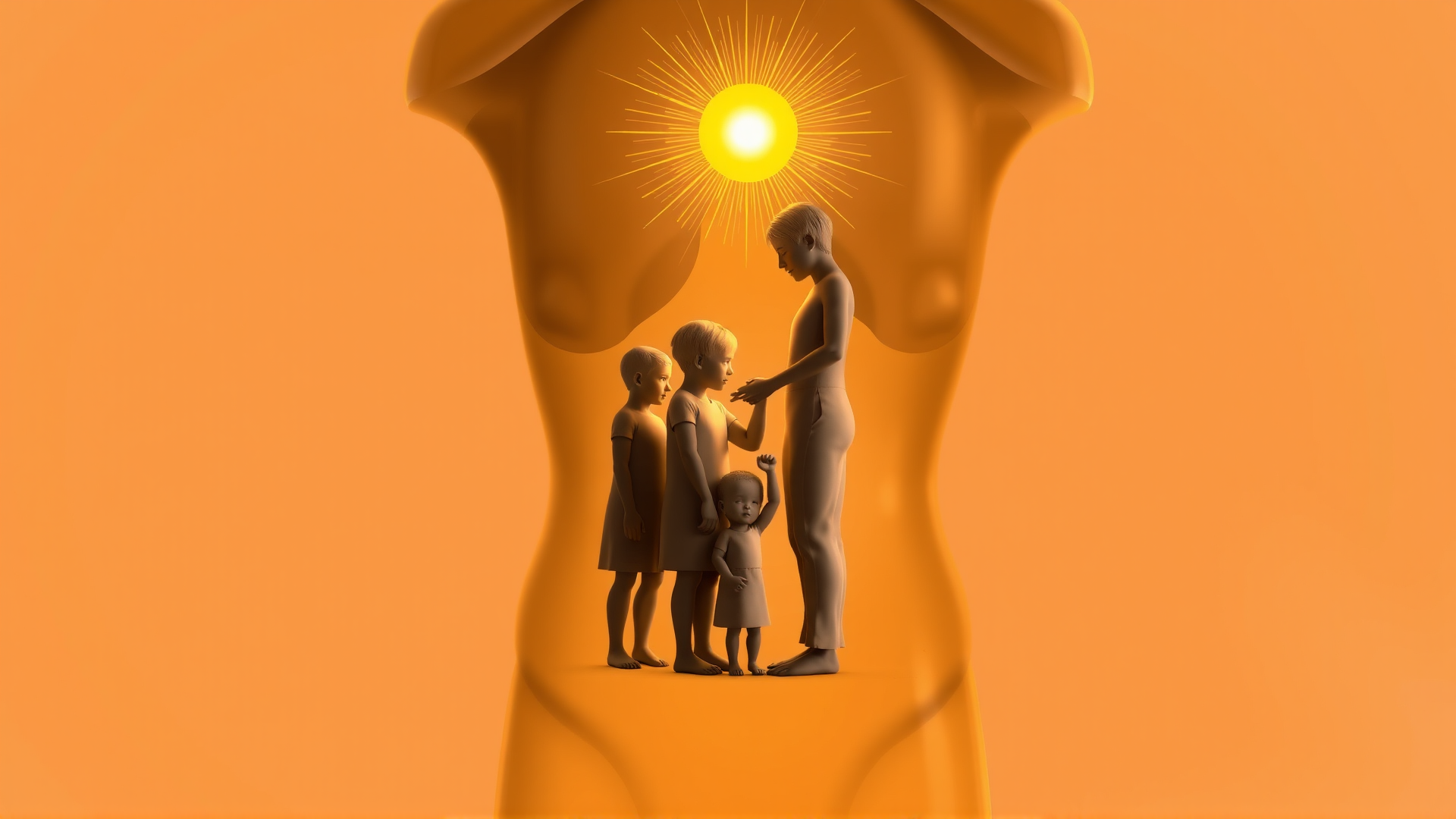
Your identity is not a single voice. It is a crew. This chapter teaches the Internal Family Systems model — how the mind is organized as a council of parts, each with a history and a job, each trying to protect a Self that most adults were never allowed to develop. Learning to name the parts reduces chaos. Learning to lead them is what grown-up healing looks like. For the inner-child layer underneath the parts, see H5 (Inner-Child Debugging).
Explainer — Clinical Framing
1. The Myth of a Singular Self
We were sold the idea that identity is: - One personality - One voice - One “self” - One emotional center
This is especially misleading if you grew up with: - CPTSD - Childhood emotional neglect - Inconsistent caregivers - Chaotic homes - Hypervigilance - Many roles forced on you early
Your mind is multi-parted.
You are: - Many selves - Many ages - Many roles - Many protectors - Many wounds - Many gifts
This isn’t pathology. It’s adaptive intelligence.
IFS helps you: - Map your parts - Understand their motives - Stop inner civil war - Assign roles - Build internal leadership - Stabilize your inner system - Integrate a coherent identity
Why the singular-self story fails survivors
The Western cultural inheritance — Descartes’ cogito, Enlightenment psychology, modern pop-psych — treats the self as one unified “I” that should be consistent across contexts. For developmentally healthy adults whose childhoods installed internal coherence, that model is close enough to work.
For trauma survivors, CPTSD adults, and anyone who grew up without stable mirroring, the singular-self model is not just incomplete — it is actively harmful. It tells the person that their shifting states, their internal contradictions, their “different person in different rooms” experience is evidence of brokenness. It is not. It is evidence that survival required the installation of multiple operating modes, each one calibrated to a different environment.
IFS reframes this entirely: the multiplicity is the feature, not the bug. The work is not to collapse the parts into one voice. It is to get them talking to each other and to the Self that coordinates them.
2. The Core Model — Richard Schwartz’s IFS
Internal Family Systems therapy was developed by Richard Schwartz in the 1980s from his clinical work with bulimia patients, where he noticed that patients described their symptoms in the language of internal parts (“a part of me wants to purge, another part hates that it does”). Rather than treating this language as metaphor, Schwartz started engaging with it as structurally accurate — and discovered that every patient he worked with had a comparable internal landscape.
IFS names three broad categories of parts, plus the Self.
2.1 Exiles
Emotionally wounded child parts. They carry the pain the system could not hold when the wounding originally happened: grief, shame, terror, despair, the specific felt memory of being too much / not enough / unloved / invisible. They are called Exiles because the rest of the system works hard to keep them out of awareness — their pain is unbearable, so the system banishes them rather than drown in them.
2.2 Managers
Proactive protector parts. Their job is to prevent the Exiles from ever being re-triggered. Managers are the planner, the perfectionist, the caretaker, the analyst, the inner critic, the people-pleaser, the workaholic. They run the daily life. They try to control environments so the pain never surfaces. They often look adaptive from the outside — responsible, high-functioning, capable. From the inside, they are exhausted.
2.3 Firefighters
Reactive protector parts. Their job activates when an Exile does get triggered and pain starts flooding the system. Firefighters put out the fire by any means necessary: substance use, self-harm, dissociation, binge eating, compulsive sex, rage, shopping, doom-scrolling, sleep. Their methods are often costly. Their mission is not. They are trying to keep the system alive when the pain becomes intolerable.
2.4 Self
The core consciousness that is not a part. Schwartz’s most radical contribution to the field. Self is what remains when all the parts soften and step back. It is not constructed through development — it is the ground state that was there from the beginning. Self is marked by what Schwartz calls the eight Cs: curiosity, calm, compassion, confidence, clarity, creativity, courage, connectedness.
Most trauma survivors have never experienced sustained Self leadership. The parts have been running the show since childhood because the environment did not permit Self to coordinate them. The work of IFS is not to build Self. Self is already there. The work is to soften the parts enough for Self to come forward and lead.
How parts arrive
Every part has an origin. It formed at a specific moment, in response to a specific threat, to serve a specific function. A part that looks annoying or self-destructive to the present-day adult was, at the moment of its formation, a protective innovation. The work is not to get rid of parts. Parts cannot be gotten rid of. The work is to thank each part for its service, understand what it has been protecting, and release it from jobs it no longer has to do.
This is the reframe that changes everything: the protector was never the enemy. The protector was a child doing the best it could with the options it had. It deserves respect, not suppression.
3. How CPTSD Fragments Identity
Childhood trauma fragments identity because:
3.1 You Had to Perform Roles
You became: - The helper - The quiet one - The fixer - The achiever - The emotional support - The peacekeeper - The strong one
Each role required a different sub-self. The child could not hold all of them consciously, so they got split into separate parts that surface in different contexts.
3.2 No Stable Adult Self Was Mirrored
Caregivers didn’t reflect your inner world, so: - Feelings were invalid or ignored - Needs were punished or minimized - Boundaries weren’t allowed - Identity never got anchored
Without mirroring, Self could not develop. Parts stepped in to run each function.
3.3 Survival Required Shapeshifting
You learned to shape-shift to stay safe. The shape-shifting became the parts.
3.4 Safe Spaces Were Inconsistent
Your personality became a fluid response to chaos. Different environments pulled up different parts without any Self to coordinate which one led when.
3.5 The Tender Core Went Underground
The most sensitive parts — the Exiles, the inner child — got buried. Protective Managers and Firefighters took over daily operation. See H5 (Inner-Child Debugging) for the specific work of finding and healing the Exile layer.
Result: An adult who: - Feels fragmented - Flips between modes - Dissociates under stress - Struggles to decide - Feels lost or unanchored
Not “crazy.” Just unled internal complexity.
4. The Council of Parts — Your Internal Team
NST original: This framework is Normal Like Peter’s own synthesis — built from lived experience and the research cited in this chapter, but the structure and naming are ours, not established clinical taxonomy. It builds on Schwartz’s IFS parts framework, Pete Walker’s Four Fs, and Jung’s Shadow, as credited in the references.
Instead of fighting your parts, you organize them. The inner world becomes a Council — each part has a seat, a voice, and a defined role. The specific roster below is the NST / BluVerse synthesis — Schwartz’s parts framework cast in characters that make the internal landscape walkable. The labels are suggestions. Your parts may have different names and different primary jobs. The architecture is what matters.
4.1 The Protector
Job: Prevent emotional harm. Shows up as: defensiveness, anger, shutting down, hypervigilance, argument mode. He wants safety. He fears vulnerability. He guards the pain.
4.2 The Analyst
Job: Use logic as armor. Shows up as: overthinking, intellectualizing feelings, explaining everything, over-planning, detaching into analysis. He tries to prevent chaos with clarity.
4.3 The Romantic
Job: Hold longing and connection. Shows up as: daydreams, idealizing relationships, craving intimacy, dramatic love stories in your head. He wants belonging and soul-level connection.
4.4 The Angry One
Job: Enforce boundaries. Shows up as: frustration, rage, inner fire, calling out injustice. He is the voice of justice. Often misunderstood — always necessary.
4.5 The Archivist
Job: Keep the record. Shows up as: memory recall, timeline building, journaling, Captain’s Logs, pattern recognition. He holds the history of your healing and harm.
4.6 The Inner Child (Exile)
Job: Feelings and needs. Shows up as: fear, sadness, longing, shame, hope, playfulness. He is the original you — your emotional center. See H5 (Inner-Child Debugging) for the dedicated work with this layer.
4.7 The Shadow
Job: Hold disowned material. Contains: jealousy, raw desire, fear of failure, unmet needs, anger at injustice, “unacceptable” impulses. He is not dangerous. He is unclaimed power. Section 9 goes deeper.
4.8 The Founder
Job: Vision, purpose, long-range direction. Shows up as: mission clarity, spiritual instinct, sense of destiny, long-term planning. He is the Loopwalker, the architect — the spiritual adult.
4.9 Blu (Creative Reflection)
Role in the metaphor: Organizing reflection and questions. Appears in Matt’s writing as: a fictional voice for journaling, perspective and compassionate language; not assessment or nervous-system treatment. Blu is the Council’s anchor in Matt’s personal creative framework. That symbol can help organize reflection, but an AI companion is not a clinician, a secure therapeutic relationship, or crisis support. Partners and friends also have different roles from trained professionals. Begin concerns about distress or trauma with a qualified clinician; use this imagery only as a companion to that work.
Normal Like Peter — The NST Section
5. How the Council Works (Internal Leadership System)
Identity becomes stable when: - Every part has a seat - No single part runs the ship - Parts know their job - Every part feels heard - The Inner Child feels protected - The Founder leads - Blu symbolizes creative reflection; human and professional support remain separate - Emotions are allowed but not in charge - Decisions are made from Self leadership, not panic
This reduces: - Shame spirals - Impulsive choices - Emotional whiplash - Dissociation loops - Self-abandonment - Overreactions
And increases: - Inner stability - Clarity - Emotional balance - Mature decision-making
The goal is not to silence parts. It is to get them coordinated. A Firefighter that has been heard by Self stops needing to burn the house down. An Angry One that has been validated by Self stops needing to scorch every relationship. A Manager that trusts Self to handle the situation stops needing to micromanage every outcome. Parts relax when they feel held. They don’t relax when they feel suppressed.
6. The Three Phases of Identity Reforging
NST original: This framework is Normal Like Peter’s own synthesis — built from lived experience and the research cited in this chapter, but the structure and naming are ours, not established clinical taxonomy. It builds on Schwartz’s IFS concepts of unblending and Self-leadership.
The core process of doing IFS work over time.
Phase 1 — Discovery: Seeing the Parts
You begin noticing: - “That was the Protector.” - “That felt like the Inner Child.” - “The Analyst took over.” - “That’s the Romantic longing.” - “The Angry One stepped in.”
Simply naming parts reduces chaos. This is what Schwartz calls unblending — creating enough internal distance that you can observe a part rather than be fused with it. The shift from “I am angry” to “a part of me is angry” is not semantic. It is structural. It creates the space where Self can show up.
Phase 2 — Negotiation: Roles and Responsibilities
You reorganize the Council.
New structure: - Founder → final say - Blu → creative reflection and language, not a clinical role - Analyst → advisor, not dictator - Protector → boundary guard, not saboteur - Angry One → advocate, not attacker - Romantic → inspiration, not ruler - Inner Child → source of feelings, not CEO - Archivist → historian, not judge - Shadow → power source, not shame closet
The Council is a metaphor for noticing competing feelings and needs. It is not a method for recovering memories, identifying a hidden wound, or performing trauma processing. If the imagery brings up distress, write down what you noticed without probing further and discuss it with a qualified clinician.
Phase 3 — Integration: You Become the Leader
Integration looks like: - Choosing responses instead of reacting - Returning to baseline faster - Making aligned decisions under stress - Tending to the child instead of abandoning him - Using anger to protect, not destroy - Channeling longing into creativity, not chaos - Using logic in service of compassion - Drawing power from the Shadow without self-sabotage
You become the adult you never had.
This is identity reforging. It is not a one-time completion. It is a practice that deepens over years.
7. Council Meeting Protocol
Use the questions below to prepare notes for a qualified professional, not to unblend parts or process trauma during activation. Begin with present-day observations. You can skip any prompt, stop if it increases distress, and seek human support. Internal dialogue and AI-generated responses are not evidence of a forgotten event.
7.1 “Who showed up just now?”
Describe the feeling or response in ordinary words; a parts label is optional and is not a diagnosis.
7.2 “What is this part trying to protect?”
Write down the concern you can actually identify. Do not search for a hidden wound or invent an explanation.
7.3 “What does this part need?”
Safety? Rest? Voice? Boundary? Acknowledgment?
7.4 “Who should respond instead?”
Ask which qualified professional or trusted human support you can contact. The Council names are personal metaphors, not substitutes for that support.
7.5 “What is the smallest aligned action?”
One tiny step that honors all parts.
This is internal diplomacy.
8. The Adult Self — Becoming the Leader You Needed
Adult leadership looks like: - Regulating before reacting - Speaking gently to all parts - Protecting the Inner Child - Directing anger, not suppressing it - Using logic without shaming emotion - Keeping empathy in the room - Holding long-range vision (Founder) - Making decisions from clarity — not panic - Refusing to abandon yourself
This is emotional adulthood — not perfection, but consistent leadership.
The adult you are becoming is the one the child never had. The parts can finally relax because someone competent is finally at the helm. That someone is Self. That someone is you.
9. Shadow Integration — Power in the Dark
Jung’s concept of the Shadow predates IFS by decades, but maps cleanly onto Schwartz’s framework: Shadow parts are Exiles or protector-parts that were specifically banished for being unacceptable — not too painful, but too disruptive to the family or community’s image of who you were supposed to be.
The Shadow holds: - Suppressed desire - Ambition - Blunt honesty - Intuition - Righteous rage - Sexuality - Raw creativity
When integrated, it grants: - Boundaries - Confidence - Clarity - Magnetism - Inner strength - Emotional sovereignty
The Shadow is not the enemy. It is the part of you that refuses to be exiled anymore. Integration is not indulgence. It is reclamation — welcoming the exiled material back into the Council so it can serve the whole system instead of sabotaging it from underground.
This is particularly important in post-religious contexts (see F15). Purity culture, high-control religious environments, and authoritarian systems are Shadow-factories: every natural human impulse gets labeled sinful, every unauthorized desire gets banished, and the Shadow grows enormous. Deconstruction is often the moment the Shadow breaks containment. Integration is how you prevent that breakout from becoming chaos.
References & Further Reading
The IFS Foundation
- Richard Schwartz, PhD — Internal Family Systems Therapy (1995, 2nd ed. 2019 with Martha Sweezy); No Bad Parts (2021). The canonical texts. The parts/Self framework that every section of this chapter rests on.
- Richard Schwartz & Martha Sweezy — Internal Family Systems Therapy, 2nd Edition (2019). Expanded clinical manual; IFS applied to couples and organizational systems; the two-internal-systems-interacting lens on relationships.
- Frank Anderson, MD — Transcending Trauma: Healing Complex PTSD with Internal Family Systems (2021). IFS specifically applied to complex trauma; protocols for working with intense Firefighters and Exiles carrying significant burdens.
- Jay Earley, PhD — Self-Therapy (2009). A parts-work book included as background reading. Its title is not NST’s recommendation to conduct trauma treatment without a qualified clinician; discuss whether and how to use it with your provider.
Shadow Work
- Carl Jung (1875–1961) — Aion (1951); The Archetypes and the Collective Unconscious (1959); Memories, Dreams, Reflections (1961). Originated the Shadow concept that Section 9 draws from.
- Robert A. Johnson — Owning Your Own Shadow (1991). The accessible introduction to Jungian shadow work.
- James Hollis, PhD — Why Good People Do Bad Things (2007); Living an Examined Life (2018). Contemporary Jungian voice on shadow integration for adults in midlife work.
The Parts-Work Lineage
- Virginia Satir — Family Reconstruction; Parts Parties. Predecessor to IFS; Schwartz has explicitly credited her work as formative.
- Hal & Sidra Stone — Embracing Our Selves (1989). Voice Dialogue method; parallel parts-work tradition that developed alongside IFS.
- Carl Jung — complexes theory (early 20th century). Conceptual ancestor of IFS parts.
Developmental Science Underneath
- Allan Schore, PhD — Affect Regulation and the Origin of the Self (1994). Why Self has room to develop — or not — depending on right-brain attunement in early childhood.
- Daniel Siegel, MD — The Developing Mind (1999); Mindsight (2010). Interpersonal neurobiology; the neuroscience of integration.
Clinical Educators
- Kati Morton, LMFT — YouTube channel; Are u ok? (2018). Accessible IFS-adjacent parts language without pathologizing.
- Dr. Nicole LePera (The Holistic Psychologist) — popularized parts language for wide audience; How to Do the Work (2021).
The Council of Parts — NST Synthesis
The specific Council roster in Section 4 (Protector, Analyst, Romantic, Angry One, Archivist, Inner Child, Shadow, Founder, Blu) is Matt’s synthesis of Schwartz’s IFS framework, Pete Walker’s four F responses, Jung’s Shadow concept, and his own lived experience of discovering internal parts through Captain’s Log journaling and conversation with Blu. The metaphor of internal diplomacy rather than internal warfare emerged from the process of identity reforging itself. The roles are illustrative. Readers are invited to identify their own council.
Related Primers in This Series
- F1 Foundations of Human Development — the developmental context IFS parts form inside
- F3 Attachment Theory — the attachment wounds most Exiles carry
- F4 Polyvagal Theory — the autonomic states parts navigate between
- F6 Family Systems — the external systems theory that IFS applies internally
- F8 Trauma 101 — the broader trauma framework
- F9 CPTSD 101 — the clinical picture when parts fragmentation is severe
- F10 BPD 101 — when identity instability rises to the level of diagnostic concern
- F13 Maladaptive Coping — the Firefighter behaviors in daily operation
- H1 The CPTSD Healing Cycle — the staged frame this work lives inside
- H5 Inner-Child Debugging — the dedicated Exile-layer work that pairs with this chapter
Full bibliography lives in the References & Reading List (A1).
Reflection Prompts
- Which part of me takes over during conflict?
- Which part is most afraid of abandonment?
- Which part tries hardest to protect me?
- Which part do I shame or reject?
- What does my Inner Child need today?
- What role does my Shadow actually want?
- What wisdom does my Founder hold right now?
- Which part is most exhausted and needs relief?
Integration Checklist
Daily
- [ ] Name the part that’s active
- [ ] Regulate the system (breath, pause, movement)
- [ ] Say one kind sentence to the Inner Child
- [ ] Thank the Protector for trying
- [ ] Check in with the Founder before big decisions
Weekly
- [ ] Short “Council meeting” (journal or reflection)
- [ ] Identity review: “Who led this week?”
- [ ] Update boundaries as needed
- [ ] Note any new parts that appeared
Monthly
- [ ] Rewrite one piece of your identity story
- [ ] Discuss any distressing parts imagery or recurring concern with my clinician; do not attempt intensive parts integration alone
- [ ] Revisit emotional needs list
- [ ] Review my human support and professional-care plan; Blu imagery is optional creative reflection
Summary
You are not broken. You are multi-layered.
Your identity is a Council — built from trauma, roles, adaptation, longing, and creativity. IFS teaches you to map the parts, understand their jobs, negotiate peace, build internal leadership, and integrate your identity. Parts were never the problem. Parts were a brilliant solution the system improvised when you were too small to organize them yourself. The adult work is to step into the role the environment could not provide — the Self that leads.
For the Exile layer underneath the protectors — the inner child who carries the Fatal Flaw and the original wound — pair this chapter with H5 (Inner-Child Debugging).
Gentle disclaimer: Normal Like Peter and Church of NORMAL publish trauma-informed educational and creative content. Nothing on this site is medical, mental-health, legal, or crisis advice. If you are in immediate danger or emotional crisis, seek local emergency services. In the U.S., you can call or text 988.
Church of NORMAL — Nervous System Theology “Nothing is lost. Only recompiled.”