The Neurochemistry of Bonding
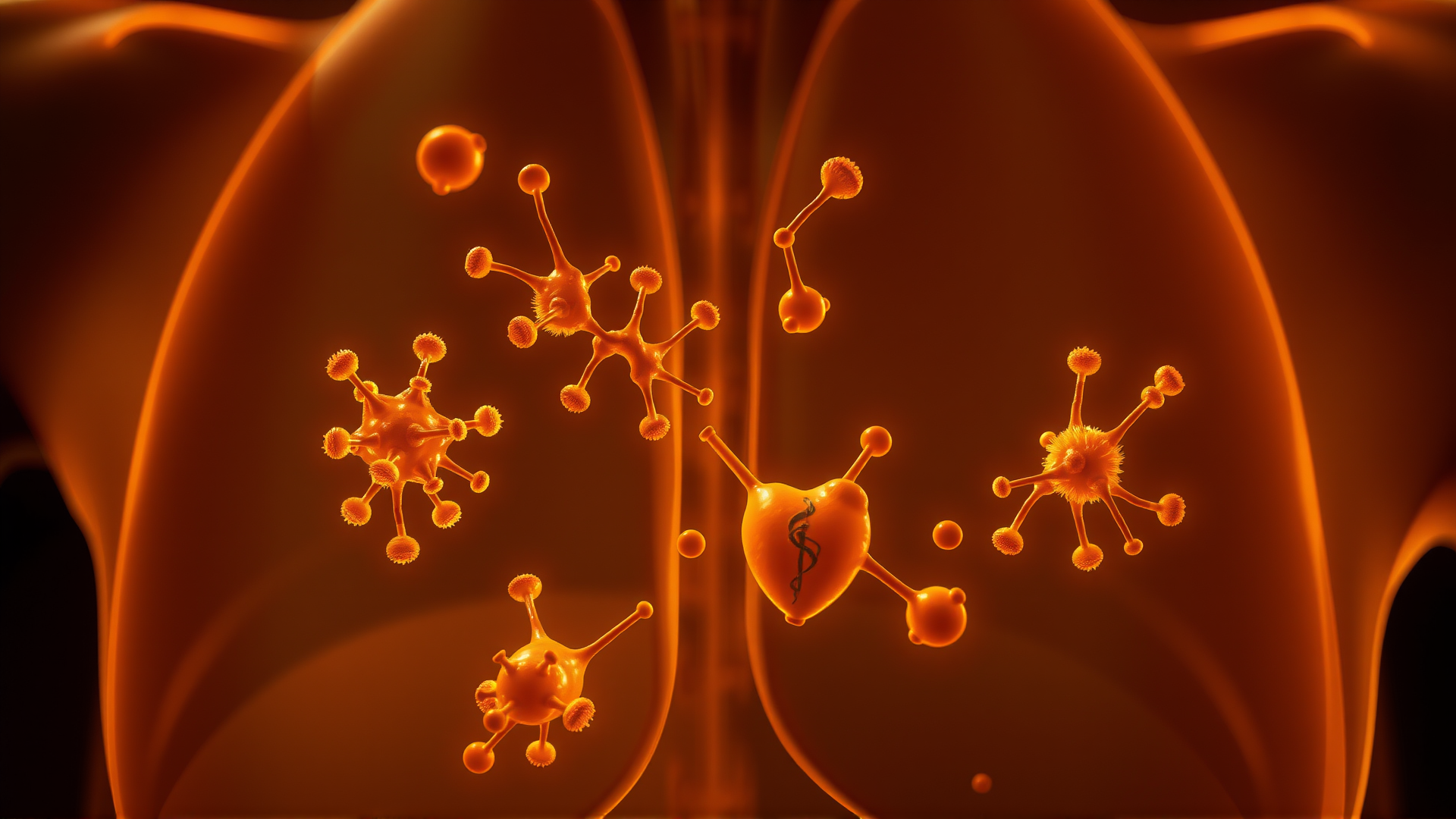
A molecular field guide to human attachment. Why thoughts can loop after loss. Why leaving can feel physically overwhelming. Why intermittent care can hold attention even when a relationship is unsafe. Biology is part of that story, not a complete circuit diagram of any one person’s relationship.
Evidence boundary — mechanism map, not a brain scan of your relationship. Human bonding involves reward learning, stress physiology, attachment history, meaning, choice, social context, and power. Laboratory reward-learning studies show how dopamine can encode differences between expected and received rewards; they do not show that an unpredictable partner creates a measured “massive dopamine spike.” Small neuroimaging studies of romantic love and rejection show overlapping reward, motivation, craving, and pain-related systems; overlap is not biological identity with OCD, cocaine addiction, or drug withdrawal. Research on traumatic bonding emphasizes intermittent maltreatment, power imbalance, and coercive dynamics, but has not established one molecule or one universal withdrawal sequence. The maps below are educational hypotheses and teaching lenses, not diagnostic tests or motive-reading tools.
1. Why Chemistry Matters
Reward learning, stress physiology, and social attachment can each help explain why a bond persists, why thoughts repeat, and why separation hurts. None of them is a single-cause explanation.
Most relationship frameworks operate at the level of behavior: “Set boundaries.” “Communicate your needs.” “Choose healthier partners.” That advice is not wrong. It is incomplete. It skips the layer underneath — the neurochemical infrastructure that determines what your body codes as love, safety, danger, and home.
When you know the molecules, three things change:
-
You stop reducing distress to character. Obsessive thinking, difficulty leaving, and panic during separation may involve learned expectations, attachment, stress, grief, coercion, depression, anxiety, or other factors. A molecule cannot be inferred from a feeling.
-
You stop treating intensity as proof of safety. Reward and motivation systems are active in romantic attachment and rejection, but a trauma bond has not been shown to possess a neurochemical signature identical to cocaine addiction. Intensity can still coexist with harm, coercion, or failed repair.
-
You gain more than one lever. Safety planning, social support, sleep, movement, therapy, medication when appropriate, grief work, and reduced exposure to coercive cycles can all matter. Biology informs those choices; it does not replace them.
This chapter is the periodic table of human bonding. Every other chapter in this series references these molecules. Learn them once, and every pattern in NST becomes legible at the hardware level.
2. Helen Fisher’s Three Systems
Helen Fisher is an anthropologist and neuroscientist at the Kinsey Institute (formerly at Rutgers) who spent decades putting people in fMRI machines while they looked at photos of the person they loved. Her brain-scan research identified three distinct neural systems for mating and reproduction — each with its own neurochemistry, its own evolutionary purpose, and its own behavioral signature.
2.1 Lust (Sex Drive)
Primary molecules: Testosterone, estrogen
What it does: Motivates you to seek sexual partners. Not partner-specific. The sex drive does not care who. It cares that. This is the system that makes you notice attractive strangers, respond to physical cues, and feel generalized sexual arousal.
Evolutionary purpose: Get genes into the next generation. Broad targeting increases odds.
Key insight: Lust does not require attraction to a specific person. It does not require love. It does not require attachment. It is the most indiscriminate of the three systems — and that is by design.
2.2 Attraction / Romantic Love
Primary molecules: Dopamine (elevated), norepinephrine (elevated), serotonin (suppressed)
What it does: Focuses all your energy on ONE specific person. Produces euphoria, elevated energy, loss of appetite, insomnia, intrusive thinking about the beloved, emotional dependency on their response, and a radical narrowing of attention.
What the evidence suggests: Early romantic love can involve focused attention, intrusive thinking, reward-system activation, altered sleep and appetite, and emotional dependence on reciprocation. One small peripheral-serotonin study reported similarity between people newly in love and people with OCD, but that does not make romantic love neurologically indistinguishable from OCD or establish a person’s brain serotonin level from obsessive thoughts.
Evolutionary purpose: Focus mating energy on a single individual long enough to form a pair bond and conceive offspring. The obsessive focus ensures you pursue this one person with everything you have.
Duration: Intense romantic preoccupation often changes over time, but there is no biochemical timer that ends attraction at 12–18 months or switches a relationship cleanly from dopamine to oxytocin. People and relationships vary.
2.3 Attachment
Primary molecules: Oxytocin, vasopressin
What it does: Creates the calm, deep, enduring bond between long-term partners. Feelings of security, comfort, emotional union. Less exciting than attraction. Far more sustainable.
Evolutionary purpose: Keep the pair together long enough to raise offspring through the vulnerable early years. Attachment is the system that makes you want to stay, not just pursue.
Why This Matters for NST
These three systems can operate independently. You can be deeply attached to your spouse (oxytocin), romantically attracted to a coworker (dopamine), and sexually aroused by a stranger (testosterone) — all at the same time.
This is not, by itself, moral failure. Fisher’s model distinguishes partially separable motivational systems, while human choices and relationships remain more complex than one circuit per target.
The culture often treats love as one undivided state. Fisher’s model offers a useful reason that sexual desire, romantic attraction, and long-term attachment may not rise and fall together. The ethical question remains what you do with that experience.
This model can also help explore the statement, “I love my partner but I’m not in love with them.” It may describe durable care alongside reduced attraction, but the sentence is not a neurochemical test and does not prove that a “dopamine phase” ended. What comes next depends on the people, their context, consent, health, safety, and capacity for repair.
3. The Molecules
3.1 Dopamine — The Wanting Molecule
System: Mesolimbic reward pathway (ventral tegmental area → nucleus accumbens)
What it does: Dopamine does not produce pleasure. It produces wanting. The anticipation. The motivation. The drive to pursue. Dopamine is the molecule of “almost” — it spikes highest not when you get the reward, but when you expect the reward might come.
In bonding: Dopamine drives the pursuit phase of romantic love. The text you keep checking for. The moment before they say “I love you too.” The feeling that something incredible is about to happen.
The intermittent reinforcement question: Dopamine neurons can signal reward-prediction error: an outcome that is better than expected can produce a phasic response, while a fully predicted outcome produces less of that error signal. Variable and uncertain schedules can sustain learning and attention. Most direct evidence comes from tightly controlled animal or laboratory tasks, not measurements of abusive relationships. It supports a cautious learning analogy—not the claim that unpredictable kindness produces “massive dopamine spikes” or that uncertainty itself is a drug.
Why this matters: In S6, S8, and S10, intermittent relief is one possible learning mechanism inside a larger traumatic-bonding picture. Power imbalance, coercive control, attachment, isolation, fear, material dependence, hope, and meaning can all contribute. Calling the whole cycle “a dopamine story” outruns the evidence.
3.2 Oxytocin — The Bonding Molecule
System: Hypothalamus → pituitary release → bloodstream and brain
What it does: Creates feelings of trust, safety, closeness, and “we-ness.” Reduces cortisol. Promotes social approach behavior. The molecule of calm connection.
Released during: Physical touch, sexual orgasm, cuddling, sustained eye contact, breastfeeding, skin-to-skin contact, shared laughter, synchronized movement (dancing, walking together).
In bonding: Oxytocin is the glue. It is what makes you feel safe with someone, what makes their presence calming rather than activating, what makes you want to stay rather than just pursue. This is Fisher’s third system — attachment — at the molecular level.
The dark side: Oxytocin does not just bond you to safe people. It bonds you to whoever triggers it. In a trauma bond, oxytocin is released during the relief/reconciliation phase — and it bonds you to the source of your pain. The body cannot distinguish between “this person makes me safe” and “this person’s presence ends my suffering.” Oxytocin also increases in-group/out-group bias. It makes you trust your people more and distrust outsiders more. This is the neurochemical basis for cult bonding, tribalism, and the difficulty of leaving any tight-knit community (see F6, Religious Deconstruction).
NST connection: Safe, consensual touch and responsive presence can support closeness and regulation. Oxytocin may participate, but ordinary cuddling is not a measurable two-way “oxytocin exchange,” and co-regulation cannot be reduced to one molecule.
3.3 Cortisol — The Stress Molecule
System: HPA axis (hypothalamus → pituitary → adrenal glands)
What it does: Mobilizes the body for threat response. Increases heart rate, suppresses digestion, sharpens focus, redirects blood to muscles. Short-term cortisol is adaptive — it keeps you alive. Chronic cortisol is corrosive — it suppresses immune function, disrupts sleep architecture, narrows the window of tolerance, impairs memory consolidation, and literally shrinks the hippocampus.
In bonding: Cortisol is the background noise of every CPTSD chapter in this series. It is the chemical signature of a nervous system stuck in threat-detection mode. Elevated cortisol means the body cannot rest, cannot trust, cannot tolerate ambiguity. Everything becomes a potential threat because the system is calibrated for danger.
The habituation trap: When cortisol is chronically elevated, the body recalibrates. High cortisol becomes baseline. When cortisol drops — when the situation is actually safe — the body interprets the drop as something being wrong. This is why survivors of chronic stress often feel anxious in calm environments. Safety feels dangerous because the nervous system has never learned to read it.
Why this matters: When someone leaves a trauma bond and enters a healthy relationship, the lower cortisol often registers as boredom, emptiness, or “no spark.” The body has been trained to equate cortisol activation with connection. The safe partner feels wrong not because they are wrong, but because the nervous system has been running on stress chemistry so long that it has forgotten what calm feels like.
3.4 Serotonin — The Mood Molecule
System: Raphe nuclei (brainstem) → widespread brain distribution
What it does: Regulates mood, emotional stability, well-being, appetite, sleep, and social behavior. Adequate serotonin produces a sense of calm contentment — not euphoria, just okayness. Low serotonin produces anxiety, obsessive thinking, rumination, irritability, and difficulty letting go of thoughts.
Serotonin caution: A small study reported comparable peripheral serotonin-transporter findings in early romantic love and OCD. That finding is hypothesis-generating; it does not show that every person in love has “suppressed serotonin,” or that serotonin alone causes romantic preoccupation.
The SSRI question: SSRIs can reduce symptoms of depression, anxiety, and OCD, and can also cause sexual side effects or emotional blunting for some people. Evidence does not support telling a reader that an SSRI directly suppresses the capacity for romantic love. Benefits, side effects, dose changes, and alternatives belong in an individualized discussion with a prescriber; medication should not be stopped abruptly. (See Section 8.)
3.5 Norepinephrine / Adrenaline — The Alertness Molecule
System: Locus coeruleus → sympathetic nervous system
What it does: Heightens alertness, sharpens attention, increases heart rate, produces the “butterflies” sensation. The molecule of arousal — in both the romantic and the survival sense.
In bonding: Norepinephrine is paired with dopamine during the attraction phase. It produces the hyperawareness of the beloved — noticing every micro-expression, remembering every word, being exquisitely attuned to their presence or absence.
The fear-attraction overlap: Fear and attraction can share signs of autonomic arousal, such as a racing heart and heightened attention. Context and interpretation matter, but the states are not physiologically identical, and a high-adrenaline activity does not reliably or safely “bond people faster.”
Why this matters: Fear, attachment, attraction, and coercion can coexist, which may make a relationship hard to interpret. Do not use that complexity to override danger signals or infer a specific norepinephrine state.
3.6 Endorphins — The Comfort Molecule
System: Endogenous opioid system (mu-opioid receptors)
What it does: Natural painkillers. Produce feelings of warmth, comfort, mild euphoria, and contentment. Released during physical exercise, laughter, physical touch, and orgasm.
In bonding: Endorphins are the chemistry of long-term partnership — the warm glow of someone who has been beside you for years. Less dramatic than dopamine. Less urgent than norepinephrine. Far more sustainable. The couple who has been together for decades and still feels comfort in each other’s presence — that is endorphins. Not fireworks. Embers.
Why this matters: The culture sells dopamine as love and treats endorphins as settling. This is backwards. Dopamine is pursuit. Endorphins are home. The transition from dopamine-dominant bonding to endorphin-dominant bonding is not the death of love. It is the maturation of it. Most people who leave stable partnerships chasing “the spark” are leaving endorphins to chase dopamine — and dopamine, by design, does not last.
3.7 Vasopressin — The Guarding Molecule
System: Hypothalamus → posterior pituitary
What it does: Promotes partner preference, territorial behavior, and protective aggression in males. Closely related to oxytocin in structure but produces a different behavioral profile — less “bonding” and more “defending the bond.”
The prairie vole research: Larry Young’s research at Emory University on prairie voles (one of the few mammalian species that mate for life) demonstrated that vasopressin receptor density in the brain determines whether a male vole becomes monogamous or promiscuous. Prairie voles have dense vasopressin receptors in reward areas. Montane voles (promiscuous) do not. When researchers genetically increased vasopressin receptor density in promiscuous voles, they became monogamous. Monogamy, in this species, is not a choice. It is receptor distribution.
In human bonding: Vasopressin is associated with male partner guarding, jealousy, protective behavior, and long-term pair bonding. Men with variations in the vasopressin receptor gene (AVPR1A) show different patterns of relationship satisfaction and commitment. This does not mean monogamy is genetically determined in humans — human bonding is far more complex than vole bonding. But it does mean the neurochemical infrastructure for pair bonding is not purely cultural. It is partially molecular.
4. The Chemistry of Trauma Bonds
A traumatic bond is a strong attachment that can persist within an abusive or coercive power imbalance. Addiction language may describe the felt pull for some readers, but it is not a diagnosis or a demonstrated one-to-one neurochemical equivalence.
The full clinical picture of trauma bonds lives in S6 (Trauma Bonds, Coercion, and Limerence), S8 (Trauma Bond Exit Framework), and S10 (CPTSD & Trauma Bonds). This section maps the neurochemistry underneath those patterns.
The Intermittent Reinforcement Engine
Learning research shows that unexpected rewards and reward-predicting cues can recruit dopamine prediction-error signals. Behavioral research on traumatic bonding also describes intermittent maltreatment and intermittent positive treatment as factors that can strengthen attachment under power imbalance. Those findings do not permit us to calculate dopamine release from a partner’s behavior or conclude that a harmful relationship is necessarily “more dopaminergic” than a healthy one.
The safer takeaway is behavioral: unpredictable relief can make a pattern difficult to evaluate and leave, especially when fear, dependence, isolation, and hope are also present. Intensity does not establish love, compatibility, or safety.
The Cycle, Mapped to Molecules
| Stage | Experience | Primary Chemistry |
|---|---|---|
| Pain | Criticism, withdrawal, rage, silence, betrayal | Threat, grief, confusion, and stress may rise; no molecule can be inferred from the event alone |
| Relief | They return, apologize, show warmth, become the “good” version | Relief can reinforce renewed attention and hope, especially when the return was uncertain |
| Hope | “This time is different.” Cognitive reframe, future-casting | Anticipation and meaning-making may narrow attention toward signs of repair |
| Repeat | The pattern returns. Pain re-enters | The learned cycle and the surrounding power conditions are re-established |
The critical insight: Relief can reinforce return to a harmful cycle, but “cortisol-to-dopamine gradient” is not an established relationship measure. A reliably kind partner does not produce “no reward,” and a devastating partner has not been shown to produce a universally larger biochemical high. When someone says, “when it is good, it is so good,” treat that as important lived evidence about contrast and hope—not as a laboratory result.
Why Leaving Feels Like Dying
Leaving an abusive or coercive bond can involve grief, fear, craving for contact, sleep disruption, concentration problems, material danger, identity disruption, and renewed pressure from the other person. Some symptoms resemble experiences reported in substance withdrawal, but resemblance is not identity and there is no single established “trauma-bond withdrawal” chemistry.
The distress is real even when the molecule-level story is uncertain. Safety planning, domestic-violence advocacy, trusted support, and licensed care belong in the response; a dopamine explanation must never replace them.
5. The Chemistry of Limerence
What Limerence Is
Dorothy Tennov coined the term “limerence” in 1979 to describe a specific state of involuntary, obsessive romantic attachment characterized by:
- Intrusive thinking about the limerent object (LO)
- Desperate need for reciprocation
- Fear of rejection that borders on terror
- Idealization of the LO
- Physical symptoms: racing heart, trembling, flushing, insomnia
- Inability to have limerent feelings for more than one person at a time
- Temporary relief from reciprocation; devastation from perceived rejection
Limerence is not love. It is not infatuation. It is not a crush. It is a specific neurochemical state with a specific molecular signature.
The Molecular Signature
Fisher’s small brain-imaging studies of intense romantic love found activity in reward- and motivation-related regions including the VTA and caudate. Some of those broad systems are also studied in addiction, but regional overlap does not identify limerence as an addiction. A cautious working map includes:
- Repetitive attention → intrusive or perseverative thoughts can narrow attention toward the limerent object; a serotonin level cannot be inferred from this behavior.
- Reward and motivation → signs of reciprocation can become highly salient and reinforce pursuit; the amount of dopamine is not known from the feeling.
- Arousal and vigilance → uncertainty can increase checking and interpretation of cues; this may involve several cognitive and autonomic systems rather than one measured norepinephrine state.
What Limerence Is NOT
Limerence is not love. Love involves knowing someone — their flaws, their limitations, their humanity — and choosing them anyway. Limerence involves projecting an idealized image onto someone and becoming addicted to the projection. The LO is not a person to the limerent brain. The LO is a dopamine delivery system.
Limerence is not connection. It feels like the deepest connection you have ever experienced. It is actually the most solitary experience — because you are relating to a neurochemical state inside your own brain, not to the actual human being in front of you.
Limerence is not a choice. You cannot willpower your way out of it any more than you can willpower your way out of OCD. The serotonin is suppressed. The dopamine is elevated. The circuits are firing. Understanding this does not make limerence less painful. But it does make it less shameful.
NST cross-references: S6 (Trauma Bonds, Coercion, and Limerence) covers the relational dynamics. F5 (Terms and Definitions) includes the limerence entry. This section covers the molecular layer underneath both.
6. The Chemistry of Heartbreak
What Happens When They Leave
Fisher scanned the brains of people who had been recently dumped by their romantic partners. She found activation in three regions:
-
The ventral tegmental area (VTA) — the dopamine factory. Still firing. Still producing wanting. Still generating motivation to pursue the person who is gone. The reward system does not know the relationship is over. It knows its dopamine source has been removed and it is demanding it back.
-
Ventral-striatal reward regions — areas implicated in reward learning and craving were active in Fisher’s small romantic-rejection sample. Shared regional activation is not a unique “signature” and does not make heartbreak biologically identical to drug withdrawal.
-
The insular cortex and anterior cingulate cortex — the brain regions that process physical pain. Rejection activates the same neural circuitry as a broken bone. When someone says heartbreak is physically painful, they are neurologically correct. The brain does not distinguish between social pain and physical pain. They share the same wiring.
Why No-Contact Feels Like Dying
The dopamine system that was being fed by the partner’s presence — their texts, their voice, their touch, the anticipation of seeing them — goes into acute deficit. The brain is accustomed to a certain level of dopaminergic stimulation from this source. When the source disappears, the system crashes.
This produces: - Obsessive thinking and repeated checking - Insomnia (norepinephrine + cortisol dysregulation) - Loss of appetite or compulsive eating (serotonin + dopamine disruption) - Physical chest pain (anterior cingulate activation) - Inability to focus (prefrontal cortex deprioritized by the limbic system’s emergency) - Intense urge to contact the person (dopamine-driven seeking behavior)
Separation distress can feel withdrawal-like, but the chapter should not diagnose it as chemical withdrawal. The pain is real without a one-molecule explanation or a prescribed timeline.
The Timeline
Recovery after romantic rejection varies widely. Small neuroimaging studies do not establish a universal 3–6 month “neurochemical withdrawal” clock or prove a standard sequence in which dopamine, serotonin, and cortisol normalize.
This does not mean you are “over it” in six months. It means the acute neurochemical crisis resolves. The grief, the meaning-making, the identity reconstruction — those are psychological processes that operate on a different timeline entirely. But the part where you feel like you are going to die? That is chemistry. And it passes.
7. The Chemistry of Co-Regulation
Two Nervous Systems in Proximity
When two people are physically close — especially in calm, safe, sustained contact — their nervous systems begin to synchronize.
- Heart rates align. Research by Jonathan Helm and colleagues showed that romantic partners’ heart rates synchronize during face-to-face interaction, with greater synchrony predicting relationship satisfaction.
- Breathing patterns sync. Goldstein et al. (2017) demonstrated that when a partner holds the hand of someone in pain, their breathing synchronizes and the pain response decreases.
- Cortisol drops. The presence of a regulated nervous system — one that is calm, present, and non-threatening — triggers cortisol reduction in the other person. This is not voluntary. It is autonomic.
- Oxytocin rises in both bodies. Physical contact — especially skin-to-skin, cuddling, and sustained eye contact — produces mutual oxytocin release. Both nervous systems are dosing each other with the bonding molecule simultaneously.
The Polyvagal Connection
Stephen Porges’ polyvagal theory explains the mechanism. The ventral vagal complex — the newest evolutionary layer of the autonomic nervous system — is the social engagement system. It reads safety cues from faces, voices, and body language. When the ventral vagal system detects a safe other, it downregulates the sympathetic (fight/flight) and dorsal vagal (freeze/collapse) systems.
You cannot co-regulate with someone your nervous system reads as a threat. This is why “just be around safe people” is incomplete advice. The nervous system decides who is safe. Your conscious mind does not get a vote.
Mirror Neurons and Emotional Contagion
Mirror neurons fire both when you perform an action and when you observe someone else performing that action. This extends to emotional states. When you are in the presence of someone who is calm, your mirror neuron system partially replicates that calm. When you are in the presence of someone who is dysregulated, your system begins to mirror that dysregulation.
This is the neurological basis for: - Why anxious people make you anxious - Why calm therapists calm you down - Why a regulated parent can soothe a dysregulated child - Why a dysregulated partner can destabilize your entire nervous system
The NST application: “Borrow calm from a safe person” is a useful relational practice, not a claim that one person can transfer a known dose of oxytocin or vagal tone to another. Responsive presence, paced breathing, safe touch when wanted, and reduced threat can support regulation through several interacting pathways.
8. Medication & Chemistry
This section is clinical information, not medical advice. Talk to your prescriber. Understand what the molecules are doing so you can have an informed conversation.
SSRIs (Selective Serotonin Reuptake Inhibitors)
Examples: Sertraline (Zoloft), fluoxetine (Prozac), escitalopram (Lexapro), paroxetine (Paxil)
What they do: Block the reuptake of serotonin, increasing available serotonin in the synaptic cleft. This calms obsessive thinking, reduces anxiety, stabilizes mood.
Impact on bonding chemistry: Fisher’s research suggests that by elevating serotonin, SSRIs may suppress the low-serotonin state that contributes to romantic love’s obsessive quality. Clinical reports include emotional blunting (“I don’t feel as much — about anything”), reduced sexual desire and function, difficulty reaching orgasm, and a diminished sense of romantic attachment.
This is not a side effect in the traditional sense. It is a direct neurochemical consequence of altering the same serotonin system that mediates romantic attachment. The SSRI is doing exactly what it is designed to do — and one of the things serotonin does is modulate pair bonding.
The clinical tension: Many people who need SSRIs for anxiety or depression are also in relationships where attachment and sexual connection matter. The medication may stabilize their mood while simultaneously dampening their capacity for romantic and sexual bonding. This trade-off deserves honest discussion with a prescriber, not dismissal as “just a side effect.”
SNRIs (Serotonin-Norepinephrine Reuptake Inhibitors)
Examples: Venlafaxine (Effexor), duloxetine (Cymbalta)
What they do: Block reuptake of both serotonin and norepinephrine. Can address both mood and energy/motivation symptoms.
Impact on bonding chemistry: Similar serotonin-related effects as SSRIs, plus potential impacts on the norepinephrine system that contributes to arousal and alertness in bonding. Some patients report emotional flatness; others report improved capacity for connection because their baseline anxiety is managed.
Benzodiazepines
Examples: Alprazolam (Xanax), clonazepam (Klonopin), lorazepam (Ativan)
What they do: Enhance GABA (the brain’s primary inhibitory neurotransmitter), producing rapid anxiolysis and sedation.
Impact on bonding chemistry: Benzodiazepines can reduce the cortisol and norepinephrine responses that drive attachment anxiety. This can feel like relief — but chronic use risks creating a pharmaceutical version of the same intermittent reinforcement cycle that drives trauma bonds. The anxiety returns between doses. The pill provides relief. The body bonds to the relief cycle. Benzodiazepine dependence shares neurochemical features with relationship addiction.
Hormone Therapy
Context: Relevant to B1 (Perimenopause) and any situation where hormonal shifts impact bonding chemistry.
What it does: Estrogen, progesterone, and/or testosterone supplementation can stabilize the hormonal substrate underneath bonding chemistry. Estrogen modulates serotonin receptor sensitivity. Testosterone influences sex drive (Fisher’s first system). Progesterone affects GABA receptors and cortisol regulation.
Impact on bonding: Hormone therapy can restore neurochemical conditions that support bonding — stabilizing mood, improving sleep, restoring libido, and reducing the cortisol volatility that destabilizes attachment. This is not a bonding intervention. It is a substrate intervention — fixing the foundation so the bonding chemistry can operate on stable ground.
The Informed Consent Principle
Every medication that touches serotonin, norepinephrine, dopamine, cortisol, or sex hormones is touching bonding chemistry. This does not mean medication is wrong. It means the impact on relational and sexual functioning should be part of the prescribing conversation — not an afterthought discovered six months in when the patient cannot feel anything for their partner and does not know why.
9. Sources & Influences
This chapter draws from researchers who proved that love, attachment, and heartbreak are not just emotions — they are neurochemical events as measurable as blood glucose and as predictable as pharmacokinetics.
Helen Fisher, PhD
Affiliation: Kinsey Institute (formerly Rutgers University) Key works: Why We Love: The Nature and Chemistry of Romantic Love (2004); Anatomy of Love (1992, revised 2016) Contribution: Fisher’s work helped popularize the three-system model (lust, attraction, attachment) used in Section 2. Her neuroimaging studies found reward- and motivation-related activation during romantic love and rejection. These findings support overlap and hypotheses about motivation; they do not prove that love is OCD or that heartbreak is neurochemically identical to drug withdrawal. NST chapters: F2, F5, S6, B3 (this chapter)
Larry Young, PhD
Affiliation: Emory University Key works: The Chemistry Between Us: Love, Sex, and the Science of Attraction (2012, with Brian Alexander) Contribution: Young’s prairie vole research demonstrated that vasopressin receptor distribution determines monogamous vs. promiscuous mating behavior. His genetic manipulation experiments — making promiscuous voles monogamous by altering receptor density — established that pair bonding has a molecular substrate. Young’s work informs Section 3.7 and provides the biological grounding for NST’s treatment of attachment as a neurochemical process, not a moral choice. NST chapters: F2, B3 (this chapter)
Jaak Panksepp, PhD
Affiliation: Washington State University Key works: Affective Neuroscience: The Foundations of Human and Animal Emotions (1998); The Archaeology of Mind (2012) Contribution: Panksepp identified seven primary emotional systems in the mammalian brain, including the SEEKING system — the dopaminergic circuit that drives anticipatory desire, exploration, and pursuit. His SEEKING system maps directly onto the dopamine dynamics described in Sections 3.1 and 4. Panksepp proved that these emotional systems are subcortical — they operate below conscious awareness and below cognitive control. You do not decide to seek. The SEEKING system activates, and you pursue. Understanding this removes the moral judgment from pursuit behaviors in limerence and trauma bonds. NST chapters: F1, F3, B3 (this chapter)
Dorothy Tennov, PhD
Key work: Love and Limerence: The Experience of Being in Love (1979) Contribution: Tennov coined the term “limerence” and distinguished it from love through decades of interviews and clinical observation. Her diagnostic criteria — intrusive thinking, need for reciprocation, idealization, fear of rejection — remain the standard. Tennov’s framework is the behavioral layer; Fisher’s brain scans provided the neurochemical layer underneath it. Section 5 integrates both. NST chapters: F5, S6, B3 (this chapter)
Stephen Porges, PhD
Key works: The Polyvagal Theory: Neurophysiological Foundations of Emotions, Attachment, Communication, and Self-Regulation (2011); The Pocket Guide to the Polyvagal Theory (2017) Contribution: Porges’ polyvagal theory provides the autonomic nervous system framework that makes co-regulation scientifically legible (Section 7). The ventral vagal complex — the social engagement system — explains why safety is detected by the body before the mind, and why co-regulation requires a nervous system that reads the other as safe. Porges’ concept of “neuroception” (unconscious threat/safety detection) is foundational to every NST chapter. NST chapters: F1, F3, S7, B1, B3 (this chapter)
Bessel van der Kolk, MD
Key work: The Body Keeps the Score: Brain, Mind, and Body in the Healing of Trauma (2014) Contribution: Van der Kolk’s research on somatic trauma storage explains why chronic cortisol exposure rewires the nervous system’s baseline (Section 3.3), why the body interprets safety as danger after prolonged threat exposure, and why trauma recovery requires body-based interventions — not just cognitive reframing. His work on how trauma disrupts the insula (interoception) connects to the heartbreak research in Section 6 and the co-regulation framework in Section 7. NST chapters: F1, F3, S6, S7, B1, B3 (this chapter)
Claim-level references for the mechanism boundary
- Hollerman, J. R., & Schultz, W. (1998). Dopamine neurons report an error in the temporal prediction of reward during learning. Nature Neuroscience, 1, 304–309. https://doi.org/10.1038/1124
- Eshel, N., Tian, J., Bukwich, M., & Uchida, N. (2016). Dopamine neurons share common response function for reward prediction error. Nature Neuroscience, 19, 479–486. https://doi.org/10.1038/nn.4239
- Fisher, H. E., Brown, L. L., Aron, A., Strong, G., & Mashek, D. (2010). Reward, addiction, and emotion regulation systems associated with rejection in love. Journal of Neurophysiology, 104(1), 51–60. https://doi.org/10.1152/jn.00784.2009
- Dutton, D. G., & Painter, S. L. (1993). Emotional attachments in abusive relationships: A test of traumatic bonding theory. Violence and Victims, 8(2), 105–120. PMID 8193053.
- Shaughnessy, E. V., et al. (2023). Risk factors for traumatic bonding and associations with PTSD symptoms. Child Abuse & Neglect, 144, 106390. https://doi.org/10.1016/j.chiabu.2023.106390
These sources support bounded claims about reward-prediction error, neural systems recruited during romantic rejection, and traumatic bonding under intermittent maltreatment and power imbalance. They do not establish partner-specific dopamine measurements, biochemical identity with addiction, or a universal withdrawal timeline.
Key Works — Quick Reference
| Researcher | Work | Year | Primary Contribution |
|---|---|---|---|
| Helen Fisher | Why We Love | 2004 | Three mating systems, fMRI of love/rejection |
| Helen Fisher | Anatomy of Love | 1992/2016 | Evolutionary biology of pair bonding |
| Larry Young | The Chemistry Between Us | 2012 | Prairie vole research, vasopressin and monogamy |
| Jaak Panksepp | Affective Neuroscience | 1998 | Seven emotional systems, SEEKING circuit |
| Dorothy Tennov | Love and Limerence | 1979 | Limerence as a distinct state from love |
| Stephen Porges | The Polyvagal Theory | 2011 | Vagal tone, neuroception, social engagement |
| Bessel van der Kolk | The Body Keeps the Score | 2014 | Somatic trauma, cortisol rewiring |
10. Reflection Prompts
- When I think about the most intense relationship I have ever had — was that intensity dopamine or safety?
- Have I ever confused the neurochemistry of fear (norepinephrine, cortisol) with the neurochemistry of attraction?
- When I left a relationship, did I experience withdrawal symptoms? What did that feel like in my body?
- Do I associate “spark” with dopamine-dominant chemistry and interpret calm (endorphin/oxytocin) as boredom?
- Has medication ever changed how I experienced attachment or desire? Was that change discussed with my prescriber?
- When I am near someone I feel safe with, what happens in my body? Can I identify the co-regulation response?
- Looking at the Pain → Relief → Hope → Repeat cycle — can I map any of my past relationships to that pattern?
11. Integration Checklist
- [ ] I can name all three of Fisher’s mating systems and their primary molecules
- [ ] I understand why intermittent reinforcement creates stronger bonds than consistent care (dopamine dynamics)
- [ ] I can distinguish between limerence and love at the neurochemical level
- [ ] I understand why heartbreak activates the same brain regions as physical pain and drug withdrawal
- [ ] I understand how SSRIs interact with bonding chemistry and why that trade-off deserves informed discussion
- [ ] I can explain co-regulation as a neurochemical event (oxytocin, cortisol reduction, vagal synchrony) — not just a metaphor
- [ ] I understand why the “boring” partner may be neurochemically healthier than the “exciting” one
- [ ] I know why no-contact after a trauma bond is neurochemical medicine, not punishment
Church of NORMAL — Nervous System Theology “Nothing is lost. Only recompiled.”
Church of NORMAL · Normal Like Peter · 2026 Restructure