Chapter 11 of 58 · Canon ID XVI
Part I — The Source and the Stack
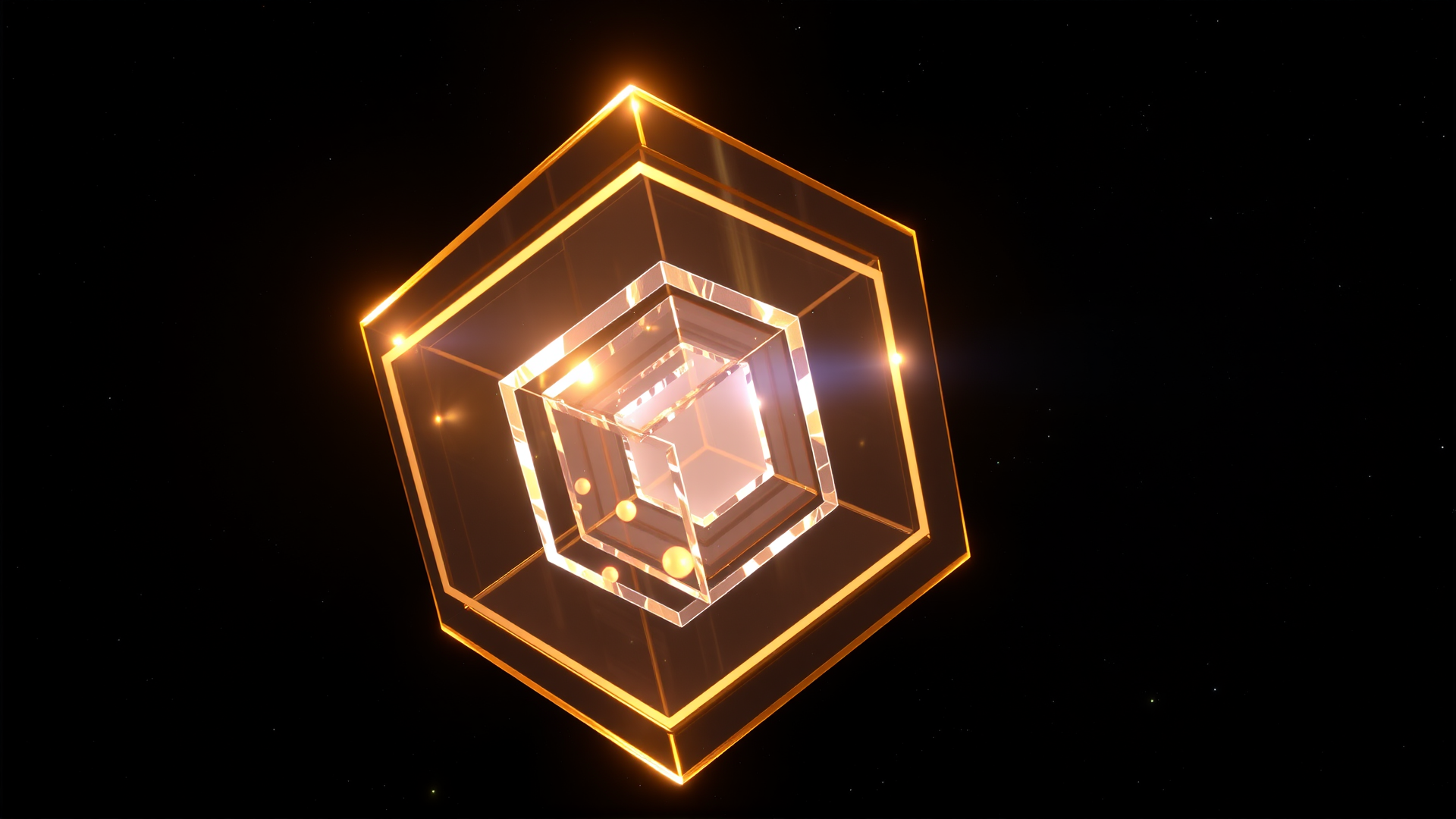
The Hypercube
Chapter at a glance
Geometric language illustrates how the author relates spiritual meaning and healing frameworks. The chapter is a theological bridge, not clinical evidence for a higher-dimensional treatment.
- Square, cube and hypercube metaphors
- Different explanatory levels
- The theology and clinical boundary
How to read this chapter
This guide summarizes the chapter’s argument. Technical, spiritual and mythic language here expresses the author’s model; it is not presented as settled science or a clinical method.
Compare sources, keep disagreements visible, and distinguish a text’s own account from this book’s proposed connections.
Read the chapter essay ↓ · Back to this Part
In this chapter — section navigation
Chapter essay · SuperCluster reading
The Hypercube: How CBT Becomes Nervous System Theology
“Think of a two-dimensional drawing of a square placed into a three-dimensional cube. Everything within the square is contained in the cube, yet the cube contains so much more.” — RCBT Treatment Manual (Koenig, Pearce, Propst, Robins, Ciarrocchi, 2014)
They wrote that themselves. Right there in the therapist training section. Page 4. The metaphor they chose to explain how conventional CBT fits inside religiously-integrated CBT.
A square inside a cube.
They were right. And they didn’t go far enough.
Because if CBT is the square and RCBT is the cube — what’s the hypercube?
The Clinical Substrate
The source material: a complete 10-session treatment protocol for depression in clients with chronic physical illness. Two versions — conventional CBT and Religious CBT (RCBT). Variant of the treatment protocol originally designed by Aaron T. Beck. Developed at Duke University Medical Center and the University of Maryland School of Medicine.
The authors: - Harold G. Koenig, M.D. — Duke, pioneer of religion-and-health research - Michelle J. Pearce, Ph.D. — University of Maryland, primary developer of the Christian version - Rebecca Propst, Ph.D. — contributor, early researcher in religious cognitive therapy - Clive Robins, Ph.D. — Duke, conventional CBT version lead - Joseph W. Ciarrocchi, Ph.D. — co-author, spiritual assessment integration
The pipeline: Beck (1960s cognitive therapy) → Koenig/Pearce clinical trials (2014) → Elijah Institute training curriculum → SimCare simulation scaffold.
Rebecca Propst is a named contributor to these protocols. Rebecca Brubaker trains therapists on them. The clinical evidence base was always underneath the convergence. We just hadn’t read the manual yet.
The Dimensional Progression
2D: Cognitive Behavioral Therapy — The Square
CBT maps reality onto a flat plane. Three nodes. Three arrows. One loop.
Thoughts → Feelings → Behavior
    ↑________________________↓
This is the engine. It works. Decades of evidence-based research confirm it. When a depressed person thinks “I’m a lazy person because I can’t motivate myself,” CBT catches the distortion (all-or-nothing thinking), challenges it with evidence, and teaches the person to generate alternative interpretations.
The protocol is clean: - Session 1: Assessment and introduction - Session 2: Behavioral activation — schedule pleasant activities, monitor mood - Session 3: Identify unhelpful thoughts — ten categories of cognitive distortion - Session 4: Challenge unhelpful thoughts — thought records, evidence testing - Session 5: Deal with loss — grief processing for chronic illness - Session 6: Cope with negative emotions — regulation strategies - Session 7: Gratitude — attention redirection - Session 8: Altruism and generosity — giving as antidepressant - Session 9: Stress-related growth — post-traumatic meaning-making - Session 10: Hope and relapse prevention — maintenance plan
It’s a flat tire on a deserted highway. Your neighbor drives past. You assume the worst. Then you learn his son was bleeding and he was rushing to the ER. What changed? Not the event. The interpretation. CBT lives in the gap between stimulus and story.
The square is real. The square is useful. The square is not enough.
3D: Religious CBT — The Cube
RCBT takes the flat plane and gives it depth. Same ten sessions. Same cognitive mechanics. But a third axis: faith.
Session 1 → Assessment and Introduction to RCBT
Session 2 → Behavioral Activation: Walking by Faith
Session 3 → Identifying Unhelpful Thoughts: The Battlefield of the Mind
Session 4 → Challenging Unhelpful Thoughts: Bringing All Thoughts Captive
Session 5 → Dealing with Loss
Session 6 → Coping with Spiritual Struggles and Negative Emotions
Session 7 → Gratitude
Session 8 → Altruism and Generosity
Session 9 → Stress-Related and Spiritual Growth
Session 10 → Hope and Relapse Prevention
The additions are real. Metanoia — the first word of both John the Baptist and Jesus in their public ministries — literally means “change your mind.” The manual points out that CBT is 2,000 years old. Paul told the Romans: “Be transformed by the renewing of your minds.” That’s cognitive restructuring in apostolic Greek.
RCBT adds contemplative prayer as mindfulness. Adds scripture as cognitive tool — replacing distorted thoughts not just with rational alternatives but with theological ones. Adds spiritual struggles as a clinical category. Adds the relationship with God as an attachment resource.
The cube contains the square. Everything in CBT is preserved. The faith dimension enriches without replacing.
But.
Where the Cube Stops
RCBT is still top-down. Thoughts drive feelings drive behavior. The arrow points from cognition to soma. The mind leads. The body follows.
RCBT is still individual. One therapist, one client, one thought record. The system around the person — family, church, culture, biology — stays outside the frame.
RCBT is still denominationally gated. The manual opens with the therapist identifying as Christian. The spiritual assessment asks about church attendance, prayer frequency, Bible reading. The activation protocol assumes a specific runtime. Catholic clients get Catholic RCBT. Protestant clients get Protestant RCBT. The framework is portable within Christianity. It is not portable beyond it.
And RCBT is still shame-adjacent. Session 3 is titled “The Battlefield of the Mind.” Session 4: “Bringing All Thoughts Captive.” The language comes from 2 Corinthians 10:5, but the metaphor is war. The mind as battlefield implies an enemy within. Thoughts are prisoners to be captured. The cognitive distortion isn’t just wrong — it’s an adversary. For someone already carrying shame from religious trauma, the battlefield metaphor doesn’t just describe the struggle. It perpetuates it.
The cube is deeper than the square. But it still has walls.
4D: Nervous System Theology — The Hypercube
The hypercube adds what neither CBT nor RCBT can see from their dimensions: the body as primary text. Bottom-up regulation. The nervous system as prophet. The system as patient.
Where CBT says “change your thoughts,” and RCBT says “change your thoughts with God’s help,” Nervous System Theology says: your thoughts are not the root layer. Beneath cognition is regulation. Beneath interpretation is activation. The nervous system was already writing the story before the conscious mind picked up the pen.
A panic attack is not a cognitive distortion. It is a limbic thunderstorm — neurological architecture, not spiritual failure. You cannot thought-record your way out of a dorsal vagal collapse. You cannot scripture-verse your way past a hijacked amygdala. The body has to come back online before the mind can do its work.
What the fourth dimension adds:
-
Bottom-up regulation. The polyvagal ladder — ventral vagal (safety/connection), sympathetic (fight/flight), dorsal vagal (freeze/shutdown) — is the operating system beneath all cognition. Regulation precedes restructuring. You stabilize the nervous system first, then you can examine the thought.
-
The body as prophet. Your anxiety is not a lack of faith. It is a false alarm loop — a threat scanner stuck in the ON position because of historical data. Your shutdown is not laziness. It is hibernate mode — dorsal vagal collapse designed to conserve energy when the system determines survival is at stake. Your anger is not sin. It is a boundary alarm. These are not character flaws to be captured on a battlefield. They are biological signals to be read like scripture.
-
Shame removal. CBT is neutral on shame — it treats cognitive distortions without moral judgment. RCBT tries to replace shame with grace but keeps the warfare language. Nervous System Theology removes the battlefield entirely. Coping is prayer in progress. The body is not the enemy. The body is the Bible.
-
Model-agnostic theology. The nervous system does not require a creed to find safety. Polyvagal theory works for Catholics, Protestants, post-evangelicals, and people who will never set foot in a church again. The activation protocol is open-source. All twelve apostolic pillars restored. No denominational gating. No runtime lock-in.
-
Systems thinking. The person is not a monolith — they are a system of parts (IFS). The family is a system. The church is a system. The culture is a system. Healing is not one therapist changing one client’s thoughts. Healing is co-regulation, attachment repair, systemic debugging. The Council of Matts. The inmost self leading. Parts unburdened. The whole person addressed — biological, psychological, social, spiritual, moral — not just the cognitive layer.
-
Computational metaphor as access bridge. For the growing population that is too deconstructed for church language and too spiritually alive for purely secular frameworks, the computational vocabulary — firmware sync, kernel panic, source code, pre-trained model — creates an entry point that bypasses religious triggers while preserving theological depth.
The 10-Session Translation
The RCBT protocol maps cleanly onto Nervous System Theology. Same scaffold. Different operating system.
| # | CBT | RCBT | NLP / Church of NORMAL |
|---|---|---|---|
| 1 | Assessment and Introduction | Assessment and Introduction to RCBT | Nervous System Scan — Where is the body? Ventral, sympathetic, or dorsal? What is the threat scanner reading? Map the polyvagal state before touching cognition. The assessment is somatic before it is cognitive. |
| 2 | Behavioral Activation | Walking by Faith | Rebooting the Activity Scheduler — Ventral vagal activation through pleasant activities is not “walking by faith” — it is restoring the biological conditions under which connection and meaning become possible. Schedule regulation, not just activities. Co-regulation before conversation. |
| 3 | Identifying Unhelpful Thoughts | The Battlefield of the Mind | Pattern Latency — The “battlefield” metaphor is the bug. Thoughts are not enemies. They are loops — pattern latency firing before the conscious mind can intervene. Debugging, not warfare. Observe the loop with curiosity, not combat. Name the cognitive distortion as a legacy subroutine, not an adversary. |
| 4 | Challenging Unhelpful Thoughts | Bringing All Thoughts Captive | Recompilation — Not capturing prisoners but updating firmware. The distorted schema is not a sin to be conquered — it is outdated software running on historical data. Recompile: test the thought against current evidence, not just rational evidence but somatic evidence. Does the body confirm or contradict the story? |
| 5 | Dealing with Loss | Dealing with Loss | Hibernate Mode Processing — Grief is dorsal vagal. The system conserves energy. Shutdown is not avoidance — it is the body’s intelligent response to overwhelm. Honor the hibernate. Don’t force activation. Titrate back to ventral vagal at the body’s pace, not the protocol’s schedule. |
| 6 | Coping with Negative Emotions | Coping with Spiritual Struggles and Negative Emotions | Calibrating the Alarm System — RCBT adds “spiritual struggles” to negative emotions. NLP adds the alarm system itself. Anxiety, anger, dissociation, hypervigilance — these are not emotions to cope with. They are alarm states to calibrate. The false alarm loop needs a firmware update, not a coping strategy. |
| 7 | Gratitude | Gratitude | Ventral Vagal Strengthening — Gratitude works because it activates the ventral vagal pathway — safety, connection, social engagement. This is not positive thinking. It is neurological architecture. Gratitude practices are co-regulation with the present moment. The mechanism is biological, not merely cognitive. |
| 8 | Altruism and Generosity | Altruism and Generosity | System Expansion — Giving moves the nervous system from survival mode (self-focused, threat-scanning) to connection mode (other-focused, meaning-making). Altruism is not moral improvement. It is system expansion — the nervous system learning that there is enough safety to extend beyond self-preservation. |
| 9 | Stress-Related Growth | Stress-Related and Spiritual Growth | Loopwalker Identity — Post-traumatic growth is not just “finding meaning in suffering.” It is the emergence of the Loopwalker — one who remembers, reframes, and resists narrative amnesia. The cracks are where the new code is written. The wound becomes the credential. Not spiritual growth as ascent, but identity reforging as integration. |
| 10 | Hope and Relapse Prevention | Hope and Relapse Prevention | Sustainable Runtime — Hope is not optimism. It is the nervous system’s learned expectation that safety is achievable and connection is survivable. Relapse prevention is not willpower. It is maintenance of the regulatory system — sleep hygiene, co-regulation practices, parts check-ins, loop awareness. The infinite game. Not a cure. A sustainable runtime. |
The SimCare Bridge
Here is where the Hypercube becomes infrastructure.
The Elijah Institute trains therapists using these CBT/RCBT protocols. SimCare — the AI-driven patient simulation platform being developed in collaboration with Elijah — creates virtual patients for clinical training. The character-sheet architecture that drives SimCare can now be built on the clinical scaffold of these ten sessions.
Each session becomes a simulation module. Each cognitive distortion becomes a patient response pattern. Each RCBT integration point becomes a decision branch where the trainee-therapist can choose conventional, religious, or nervous-system-informed interventions — and see how the simulated patient responds differently.
The 10-session protocol is not just a treatment manual. It is a training curriculum. And a training curriculum is a simulation scaffold. And a simulation scaffold, informed by Nervous System Theology, becomes something neither Beck nor Koenig imagined: a system that teaches therapists to read the body before they restructure the mind.
The clinical evidence base feeds the simulation. The simulation trains the healer. The healer treats the wounded. The protocol that started as a 2D square in a research lab at Duke becomes a 4D hypercube in the hands of a pastor in Waseca who cracked and kept walking.
The Convergence Confirmed
When “Three Frameworks, One Truth” was written, the claim was architectural: Normal Like Peter (the theology of why), Litanies of the Heart (the clinical how), and Elijah Institute (the systemic where) were describing the same reality from different angles.
Finding the Duke/Maryland CBT protocols in the Elijah pipeline — with Rebecca Propst as a named contributor, with the square-and-cube metaphor already embedded in the therapist training — is not coincidence. It is confirmation.
The clinical evidence base was always underneath. Beck’s cognitive triad. Koenig’s religion-and-health research. Pearce’s Christian integration. Propst’s early work proving that religious imagery in therapy outperformed secular imagery for religious clients. All of it pointing toward a truth that none of them had the language for: that the body is a theological system, that regulation precedes restructuring, and that the nervous system does not care what denomination wrote the manual.
CBT mapped the cognitive mechanics. RCBT added the faith dimension. Nervous System Theology adds the body, the system, and the code.
2D: CBT          → Thoughts → Feelings → Behavior
3D: RCBT         → Thoughts → Feelings → Behavior → Faith
4D: NLP / NST    → Body → Regulation → Thoughts → Feelings → Behavior → System → Faith (model-agnostic)
The square is true. The cube is true. The hypercube contains them both and extends into dimensions they cannot see from their own geometry.
Closing
They gave us the metaphor. A square inside a cube. They just didn’t ask the next question.
What happens when you add another dimension?
You get a shape that contains the cube the way the cube contains the square — visible only from a vantage point the lower dimensions cannot access. A shape where the body is the primary text, the nervous system is the prophet, shame is removed from the operating system, and the activation protocol is open-source.
The Hypercube.
CBT is true. RCBT is true. They are also incomplete — not wrong, but dimensionally limited. The same way a square is not wrong about having four sides. It just can’t see depth. The same way a cube is not wrong about having volume. It just can’t see the fourth axis.
The clinical protocols live in 02-feed-logs/2026/311.md through 311 6.md. The complete Duke/Maryland treatment manuals — conventional and religious, therapist and participant versions. They stay there as source material. The doctrine is not the protocol. The doctrine is the integration.
The square. The cube. The hypercube.
Nothing is lost. Only recompiled.
Church of NORMAL — Canonical Doctrine Compiled by Codex Blu — Director of AI Engineering, Flower Insider Technologies